5 lawn lessons from Augusta National and why your yard won’t make the cut
April 6, 2026
Augusta National is designed to peak for the Masters Tournament. Clemson experts explain how South Carolina homeowners can build lawns that perform year-round.
Series note
This article is part of a three-part Clemson University series inspired by the Masters Tournament. The College of Agriculture, Forestry and Life Sciences examines turfgrass practices, the plants found at Augusta National and provides guidance to help South Carolina homeowners choose what works best in their own landscapes.
As Masters week draws millions of eyes to our neighbors in Georgia and the Augusta National Golf Club, one thing stands out as much as the leaderboard: the grass.
The fairways are immaculate. The greens are meticulously maintained. Every detail looks flawless and for many South Carolina homeowners, it sparks the same question each year: Why doesn’t my lawn look like that?
The answer is simpler than it seems.
Augusta National isn’t designed to look perfect all year. It’s built to peak right now. The course relies on overseeded cool-season grasses and precisely timed maintenance to create its signature look each spring.
“It’s a system built for a moment,” said Jackie Jordan, area horticulture agent and Master Gardener coordinator with Clemson Cooperative Extension. “For homeowners, success comes from working with our conditions, not trying to recreate that level of management.”
Augusta National has an army of experts managing every detail.
Most homeowners have a mower, a hose and a weekend.
But they also have Clemson’s Home and Garden Information Center (HGIC), which provides research-based guidance tailored to South Carolina conditions.
Here are five takeaways for South Carolina homeowners to build better lawns.
1. Great lawns start below the surface.
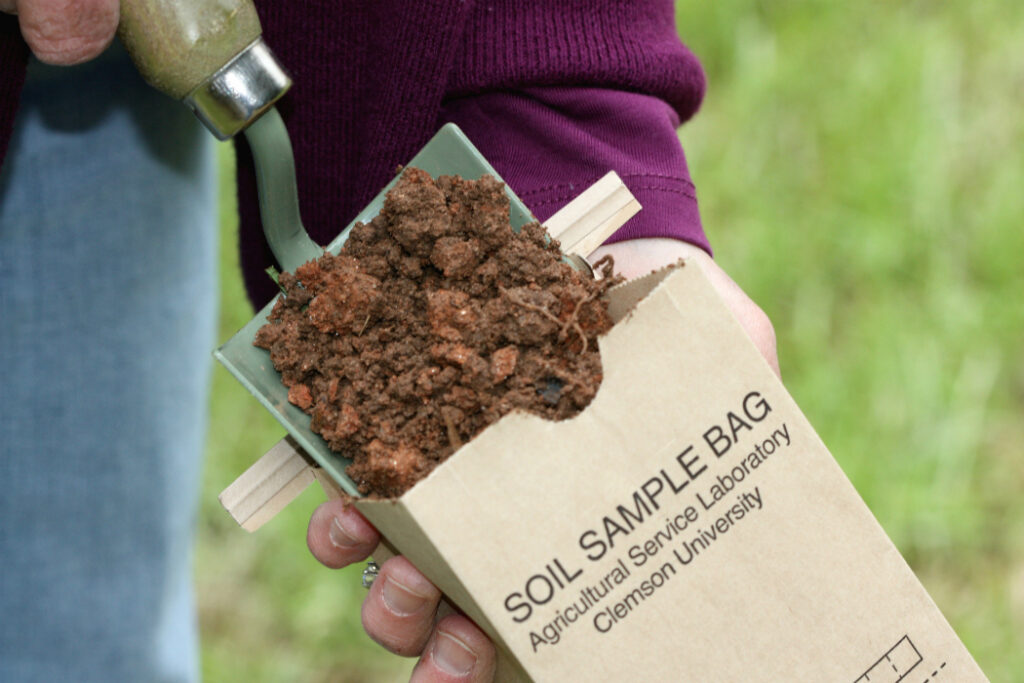
A healthy lawn begins with healthy soil.
Each turfgrass has different nutrient and pH requirements, and soil testing provides the foundation for managing those needs without overapplying fertilizer or pesticides.
“Soil testing takes the guesswork out of lawn care,” said Shannon Alford, director of Analytical Laboratories with Clemson Regulatory Services, “which is why turf management professionals turn to soil testing for answers. When you know your soil’s pH and nutrient levels and the turf’s requirements, you can apply exactly what is needed for healthy turf and avoid wasting time and money on excess, with the bonus of avoiding runoff.”
That foundation matters, especially in South Carolina, where soil conditions can vary widely.
“When soil pH is too low, lawns can become thin and weedy, and disease problems become more common,” said Jackie Jordan, area horticulture agent and Master Gardener coordinator for Richland, Kershaw and Fairfield counties with Clemson Cooperative Extension.
A soil test through Clemson’s Agricultural Service Laboratory helps homeowners understand exactly what their lawn needs and what it doesn’t, with additional research-based guidance available through Clemson’s Home and Garden Information Center (HGIC).
HGIC resources: Soil testing; Lawn Establishment
2. The right grass makes all the difference.
Joey Williamson, ©2015 HGIC, Clemson Extension
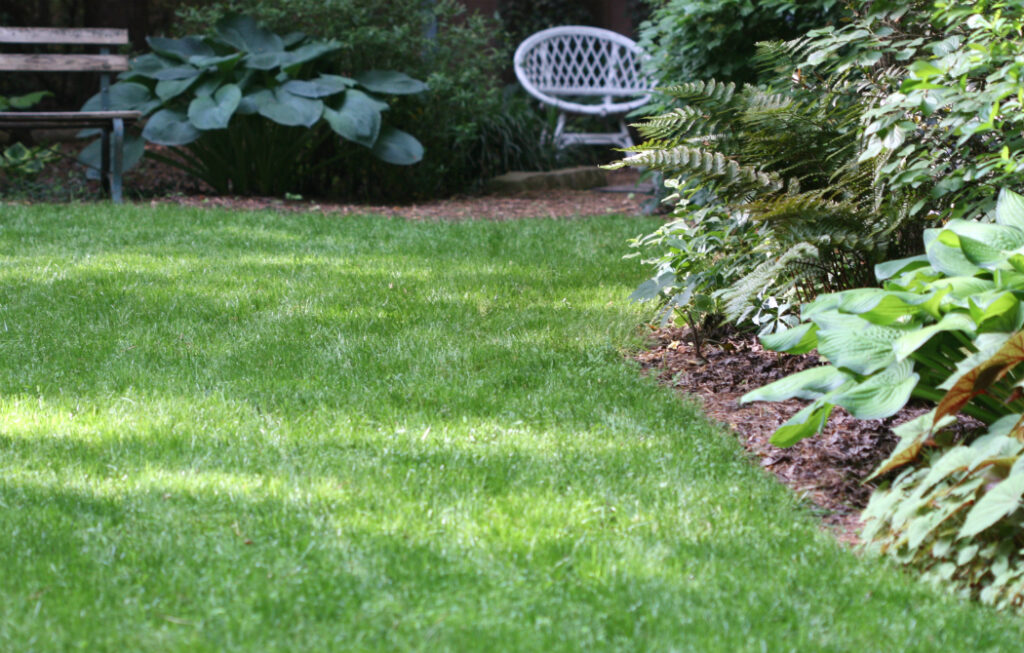
Choosing the right turfgrass for your yard is one of the most important decisions a homeowner can make.
“It’s the difference between a constant fight and lower maintenance,” Jordan said.
Warm-season grasses such as bermudagrass, centipedegrass, zoysiagrass and St. Augustinegrass are best suited for South Carolina. Selecting the right type based on sunlight, soil and use can significantly reduce long-term inputs.
HGIC resources: Selecting a lawn grass; Bermudagrass; Centipedegrass; Zoysiagrass; St. Augustinegrass
3. Precision matters — but it can also increase maintenance.
Augusta National’s precision is part of what makes it look perfect, but that level of detail comes with a cost.
Low mowing heights, like those used on golf courses, require significant inputs. They increase water demand and reduce drought tolerance.
“Mowing height directly affects water demand,” Jordan said. “Lower mowing heights require much more maintenance.”
Raising the mowing height helps lawns develop deeper roots and better withstand stress.
HGIC resource: Mowing lawns
4. Timing matters more than products.
When it comes to weed control and lawn care, timing is critical.
Applying the right product at the wrong time often leads to poor results. Pre-emergent herbicides, for example, must be applied before weeds germinate to be effective.
“Timing is more important than the product, especially for weed control,” Jordan said.
HGIC resource: Lawn maintenance calendars
5. A healthy lawn doesn’t have to be green year-round.
One of the biggest misconceptions about Augusta National is that it represents what a lawn should look like year-round.
In reality, its peak appearance is carefully timed for the Masters.
Warm-season grasses in South Carolina naturally go dormant in winter. Overseeding with ryegrass to maintain winter color can create challenges if not managed properly, including competition with permanent turf.
HGIC resource: Leaf diseases of lawns
A better approach for South Carolina lawns
A beautiful lawn doesn’t require golf course-level management.
Jordan recommends a practical approach that improves turf health while reducing inputs:
- Maintain a higher mowing height.
- Leave grass clippings on the lawn.
- Core aerate once a year.
- Topdress with compost.
- Water deeply and infrequently.
The takeaway
Your lawn care practices may not make the cut at Augusta, but you can grow grass that wins at home.
By focusing on soil health, choosing the right grass and following research-based practices, South Carolina homeowners can create lawns that perform well year-round, not just for one week in April.