








The Charleston Museum renovates its Becoming Americans: Charleston in the Revolutionary War permanent exhibit
June 26, 2019
Just in time for Carolina Day (June 28) and the 4th of July, The Charleston Museum is pleased to announce the renovation of its Becoming Americans: Charleston in the Revolutionary War permanent exhibit.
Charleston played a critical role in the Revolutionary War. South Carolina was the wealthiest of the thirteen rebellious colonies and Charleston was its key port to maintain its trade with the outside world. The British would make three attempts against the city during the Revolutionary War. Their defeat at the Battle of Sullivan’s Island on June 28, 1776 was a crucial patriot victory, which convinced many that independence could be achieved. The Siege of Charleston, meanwhile, was the longest siege of the Revolutionary War and the largest battle in South Carolina. These events and others are chronicled in the new exhibit, which will also features artifacts and period images that have not been exhibited at the Museum before. Among them are the grapeshot that purportedly killed Count Casimir Pulaski, a Polish volunteer cavalryman who assisted the patriots, and watercolors of the Battle of Sullivan’s Island rendered by an American officer.
The Museum is grateful to our sponsors for the exhibit, Gilchrist/Bissell Wealth Management of Raymond James and the Henry & Sylvia Yaschik Foundation.
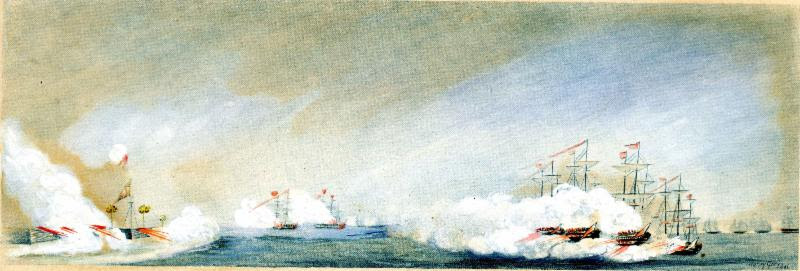
Battle of Fort Moultrie “The Unsuccessful Attack on the Fort on Sullivan’s Island, the 28th of June, 1776,” watercolor on paper delineated by Lieutenant Henry Gray, 1802
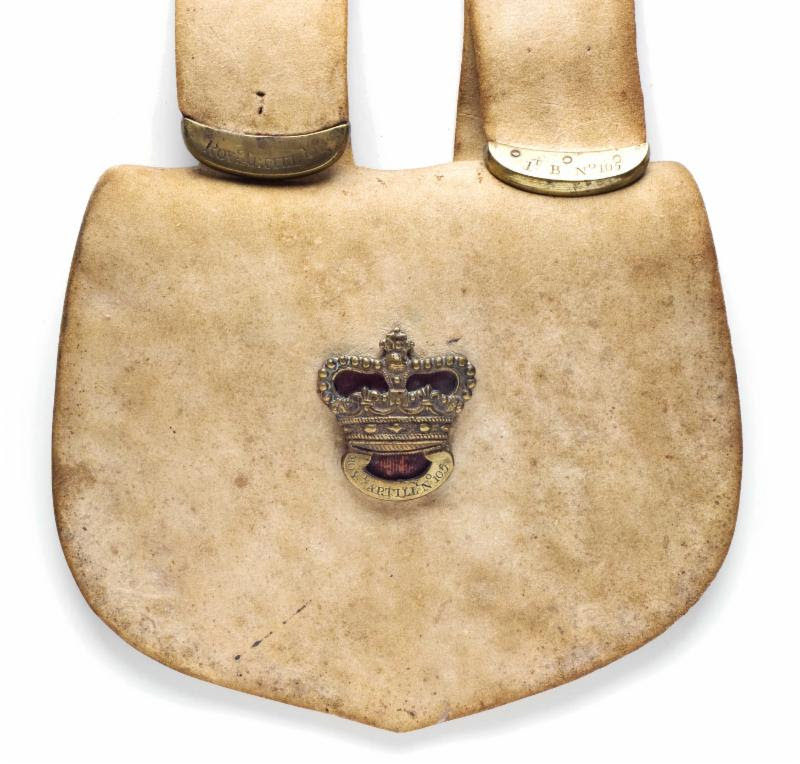
A rare cartridge box carried by a member of the British Royal Artillery at the Battle of Lexington and Concord.
The Charleston Museum, founded in 1773 and considered America’s first museum, is a 501(c)(3) non-profit organization located at 360 Meeting Street in downtown Charleston. The Museum is home to the most extensive collection of South Carolina-related natural and cultural history materials known, two National Historic Landmark Houses and the Dill Sanctuary, a 580-acre wildlife preserve. The Museum’s mission is to educate Charleston area residents and visitors about the natural and cultural history of the South Carolina Lowcountry through collections, exhibitions, preservation, conservation, research and related programming. Museum hours are Monday-Saturday 9 a.m. to 5:00 p.m. and Sunday 12 p.m.-5 p.m. Museum admission is $12 for adults and $5 for children; Tickets, including admission to two or more sites offered at a discount, can be purchased at the Museum, its historic houses, or online in advance.