








Tick Activity on the Rise Across the Upstate: What You Need to Know
July 13, 2025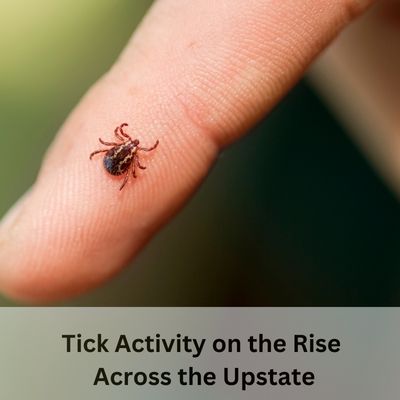
Communities across Upstate South Carolina are seeing more ticks than ever before — and it’s not just by chance. Public health experts, including those at the CDC and Clemson University, point to milder winters, wetter springs, and shifting habitats as key reasons behind this surge in tick populations. These environmental shifts are creating longer tick seasons and more favorable conditions for ticks to thrive, increasing the risks for both people and pets throughout the region.
Locally, tick encounters and related illnesses are confirmed to be on the rise. The Upstate Tick Testing Lab reported a 217% surge in tick submissions between March and May of this year compared to the same period last year. Over one-third of these deer ticks carried pathogens such as Lyme disease (Borrelia burgdorferi), Babesia, or Anaplasma. Meanwhile, emergency room visits for tick bites nationwide are at their highest since 2019.
Why Tick Season is Longer
Milder winters let ticks survive below-freezing temperatures and remain active later in the fall and earlier in the spring. These warmer winters extend tick breeding and activity cycles.
Wetter springs promote dense vegetation and high humidity — ideal conditions for tick survival. Tick development depends on temperatures above approximately 45°F and high humidity.
Together, these factors mean ticks emerge earlier, stay active longer, and thrive more — leading to the increased encounters Upstate residents are reporting.
What This Means Locally
Tickborne diseases are present throughout the Upstate. Between 2000 and 2020, cases of Lyme disease and other tickborne illnesses were confirmed in many counties across the region, though these numbers are often underreported. Clemson University and local health officials are monitoring increases in tick activity, especially as newer species like the lone star tick continue expanding their range. This species is linked to alpha-gal syndrome, a serious allergy to red meat.
Multiple tick species pose risks in South Carolina. These include the lone star tick, black-legged tick, Gulf Coast tick, American dog tick, brown dog tick, and the invasive Asian longhorned tick. Each is capable of transmitting diseases such as ehrlichiosis, anaplasmosis, Rocky Mountain spotted fever, and alpha-gal syndrome.
How to Protect Yourself in the Upstate
The CDC recommends the following prevention strategies to minimize your risks:
-
Wear protective clothing: Cover arms and legs; tuck pants into socks when outdoors.
-
Use EPA-registered repellents: Products with DEET, picaridin, or permethrin (for gear) deter ticks.
-
Do daily tick checks: Focus on hidden areas such as the scalp, groin, and armpits. Removing ticks quickly helps prevent disease.
-
Shower soon after being outdoors: This helps wash off ticks before they can attach.
-
Inspect and treat pets and outdoor areas: Use veterinarian-approved tick prevention methods and keep yards clear of tall grass and shrubs.
-
Know the symptoms: Tickborne illness symptoms can include fever, rash, and fatigue. See a doctor if you feel unwell after a tick bite.
What to Do if Bitten
-
Remove the tick properly using fine-tipped tweezers. Pull straight out without twisting.
-
Clean the area and monitor for symptoms such as rash or flu-like illness.
-
See a healthcare provider if symptoms appear. Early antibiotic treatment can prevent serious complications.
-
Report unusual tick bites, especially if they result in new food allergies or uncommon symptoms.
Final Takeaway
While the Upstate may not yet be considered a Lyme disease “hot spot,” the documented increase in tick activity means any tick bite carries risk. Year-round vigilance — through personal protection, environmental management, and prompt medical attention — remains the community’s strongest defense. Stay informed and enjoy outdoor life safely.