







Governor Henry McMaster Announces Fiscal Year 2026-2027 Executive Budget
January 12, 2026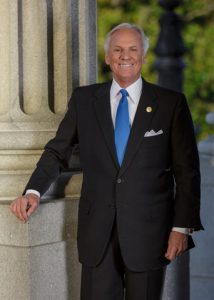
Governor Henry McMaster today unveiled his Executive Budget for Fiscal Year 2026-2027, which invests more than $1 billion in South Carolina’s roads, cuts the income tax, strengthens the state’s rainy day savings, and raises teacher pay.
The budget also makes higher education more affordable, expands the full-day four-year-old kindergarten program, provides breakfast at no cost to every student, and recommends a comprehensive population growth study to ensure South Carolina’s infrastructure and essential services can keep pace with the state’s rapid growth.
“Our state government is in superior fiscal shape, its laws and policies are business friendly. The state’s income tax is shrinking every year, while our population continues to grow. Investments in education, public safety and workforce training are paying off. We are preserving and protecting our lands, natural resources, and cultural heritage for future generations. And our infrastructure and energy demands are being met with planning, foresight, and commitment,” Governor McMaster wrote in a letter to the General Assembly. “South Carolina’s future prosperity requires that we constantly work to create, innovate and improve our efforts in each of these endeavors. By thinking big, by being bold, and by making these transformative investments, I believe we will set our state on a course that will provide the opportunity for prosperity, success, and happiness for generations of South Carolinians.”
A copy of the governor’s executive budget, along with his letter to the General Assembly and a detailed explanation of each allocation, can be found here, and a copy of a presentation outlining the governor’s priorities can be found here.
The following executive budget highlights are attributable to Governor McMaster:
Executive Budget Highlights:
Over $1 Billion in New Money to Keep Road Projects Moving:
“We have made tremendous progress improving our roadways, with major projects under construction in every corner of the state. Currently there are almost $7 billion in active projects underway across the state, up from $2.7 billion in 2017. Much of that progress is a result of four years’ worth of state budget appropriations totaling $1.4 billion for new construction and improvements to state-owned roads, bridges, highways, and interstates.
“However, nationally and here in South Carolina, inflationary construction and labor cost increases now threaten to create crippling delays and busted budgets for major road construction projects currently underway and those soon to break ground.
“My Executive Budget recommends an appropriation of $1.1 billion in new surplus money to keep current and future construction projects moving and on schedule despite inflationary cost increases.”
Population Growth Study for the Future:
“In addition to inflation, South Carolina’s major infrastructure systems and essential government services are struggling to support and keep up with the explosive and unrestrained population growth happening across the state. Last year, the U-Haul rental company ranked South Carolina as the number one destination for their moving trucks and vans.
“Left unaddressed, the state may face future problems with water and sewer access, traffic congestion, road and bridge repair, demand for electric power generation, public safety, school overcrowding, and healthcare availability.
“The time has come, and we must start now, to conduct a thorough analysis and study to determine if our state’s infrastructure and government services will be able to keep pace if population growth continues unrestrained.
“This Executive Budget includes a proviso directing the Office of Revenue and Fiscal Affairs to issue a request for information (RFI) to identify the scope, expectations, and costs for developing one or more comprehensive analyses to measure the impacts of the 10 and 20-year projected population growth on South Carolina’s infrastructure and essential government services.”
Largest Rainy Day Savings Fund:
“South Carolina government currently maintains its largest rainy day reserve fund balance and low amounts of general obligation debt. In 2022-2023 my Executive Budget began recommending that we maintain a “rainy-day” fund balance of no less than 10% of the total General Fund revenues each year.
“To maintain that balance, I am recommending that a total of $1.4 billion be set aside and placed in the State’s “rainy day” fund. Saving money instead of spending it has served our state well – and ensures that we will always be prepared for future economic uncertainties.”
Keep Cutting the Income Tax:
“Until a few years ago, South Carolina had the highest personal income tax rate in the Southeast and the 12th highest in the nation. No more.
“Five years ago, I signed into law the largest income tax cut in state history. As a result, South Carolina taxpayers have kept an additional $1.275 billion of their hard-earned money. My Executive Budget continues to cut the state’s income tax an additional $107.2 million, by dropping the rate from 6% to 5.9%.
“And we don’t need to stop at 5.9% – we should continue cutting or eliminating the personal income tax rate as much as we can, and as fast as we can.”
New Teacher Pay – $50,500.00:
“Eight years ago, the minimum starting salary of a teacher in South Carolina was $30,113 and the average teacher salary was below the Southeastern average. At that time, I proposed that we begin raising the minimum starting teacher salary, as much as possible each year, with the goal of raising it to at least $50,000 by 2026.
“This year, my Executive Budget recommends spending $150 million of the budget surplus to continue raising the minimum starting teacher salary, going from $48,500 to $50,500. This represents a 68% increase since 2017. South Carolina’s required minimum starting teacher salary continues to exceed that of both Georgia and North Carolina.
“In addition, as the minimum salary for new teachers has risen, so has the average salary of a public school teacher in South Carolina, reaching $64,050 last year, which has exceeded the Southeastern average every year since 2021.”
Expanding Full-Day 4K:
“Since the statewide expansion of the full-day four-year-old kindergarten program (4K) starting in the 2021-2022 school year, enrollment in the program offered in public schools, private childcare centers, and private schools, has increased significantly.
“Today, 18,411 students are enrolled in the program, which is a 30% increase since the program was expanded. Currently, every public school district in the state, except one, is offering full-day four-year-old kindergarten for children from low-income households with an annual income that is at or below 150% of federal poverty guidelines.
“Enrollment has also grown at the private day cares, private schools and community head start providers participating in the program. According to the Office of First Steps to School Readiness (First Steps) there are currently 1,899 classroom slots available at these private providers.
“To fill these available classroom slots, this Executive Budget includes an appropriation of $9.9 million to the Office of First Steps to expand enrollment eligibility to children from households with an annual income that is at or below 300% of the federal poverty guidelines. As an example, a family of four with a household income of $96,450 would be eligible.”
Breakfast For Every Public School Student:
“Recently, the State of Arkansas began offering free breakfast to all public school students – regardless of household income. I propose that South Carolina do the same.
“Research studies have documented that children who eat breakfast daily are better prepared to learn in the classroom. Eating breakfast improves their cognitive performance, attention, memory, and behavior – thereby improving their academic performance.
“My Executive Budget recommends an appropriation of $8.7 million in new money, which the South Carolina Revenue and Fiscal Affairs (RFA) estimates will fund 4.1 million meals, sufficient to provide a daily breakfast for every public school student in the state.”
Expanding School Choice:
“The Education Scholarship Trust Fund provides scholarships to eligible low-income parents so they can choose the type of education environment and instruction that best suits their child’s unique needs. Last year, the General Assembly increased the minimum number of scholarships required to be funded in this year’s state budget from 10,000 to 15,000. They placed no cap on the number of scholarships that may be funded above 15,000.
“Due to the popularity of the program, my Executive Budget recommends expanding the number of funded scholarships to 20,000 with an appropriation of $61.4 million in new money, which will also increase the scholarship award amount from $7,500 to $7,634.”
School Resource Officers in Every School:
“Placing an armed, certified school resource officer (SRO) in every school, in every county, all day, every day, has been one of my top priorities as governor. At my request, the General Assembly began funding a grant program administered by the Department of Public Safety, to provide school districts with funds to hire more resource officers for our state’s 1,283 public schools.
“The grant program has been very successful and has more than tripled the number of schools with an officer assigned to a school, going from 406 in 2018 to 1,181 in 2025.
“In last year’s budget, and at my request, the General Assembly provided the final full-funding necessary to place a full-time SRO in all 1,283 public schools statewide. While it is no longer necessary to request an appropriation of new money for the program, this Executive Budget maintains the current level of annual funding at $56.2 million.”
Freezing College Tuition:
“This year marks the seventh consecutive year that I will propose that we freeze college tuition for in-state students with an appropriation of $39.2 million. To receive funds from this appropriation, each institution is required to certify that there will be no in-state tuition or mandatory fee increase for the 2026-2027 academic year.”
College Maintenance and New Capital Projects:
“My Executive Budget recommends appropriating $81.7 million in one-time funds for deferred maintenance and critical capital building projects on the campuses of our public colleges and universities, and $40.3 million for the state’s technical college campuses.
“The formula used to calculate each school’s appropriation is based on each school’s fall 2025 in-state enrollment reported to the Commission on Higher Education (CHE). Each college and university receives $1,000 for each in-state undergraduate student enrolled in the fall of 2025; the technical colleges $500.”
Increasing Need-Based Financial Aid:
“For the sixth year in a row, my Executive Budget proposes providing $80 million in state lottery funds for needs-based grants so that every South Carolinian who qualifies for financial aid – as measured by federal Pell Grants – has sufficient state financial assistance to attend any in-state public college, university, or technical college. Students at private, independent, and historically black colleges and universities will receive an additional $20 million for Tuition Grants and assistance as well.
“I am also recommending funding for a new needs-based college scholarship, the Meeting Street Scholarships, using $15 million in new one-time funds. These funds will help leverage private donations to provide a $10,000 annual college scholarship up-to four years, for academically prepared, Pell Grant eligible, in-state students to attend an eligible South Carolina college or university.”
Future of Higher Education Institutions Study:
“Once again, I will renew my call for the General Assembly to fund and authorize a systemic review of our state’s 33 public institutions of higher education, to be procured by the Department of Employment and Workforce. The goal is to make sure we are preparing to meet our state’s future workforce needs.
“This study will address the sustainability, accessibility, and affordability, as well as provide an assessment of the need for consolidation of existing physical space, programs, certificates, and degrees offered at our public colleges and universities, as compared to the projected workforce needs of our state in the future.”
Workforce Technical College Scholarships:
“To address the high demand for skills, training, and knowledge, this Executive Budget once again provides $95 million in lottery funds to South Carolina Workforce Industry Needs Scholarships (SC WINS) through the South Carolina Technical College System.
“This very successful program has provided over 120,000 South Carolinians with scholarships to cover the cost of tuition and required fees at any of our technical colleges to earn a post-secondary or industry credential in high-demand careers like manufacturing, nursing, computer science, information technology, transportation, logistics, or construction.”
MUSC Comprehensive Cancer Hospital:
“The Medical University of South Carolina (MUSC) estimates that South Carolina’s incidence of cancer rate for adults ages 18 and over will be 18% between 2023 and 2028, surpassing the national growth rate of 12%. And, over the next 15 years, cancer rates are projected to increase by 30%.
“This Executive Budget recommends $115 million for the creation of a new National Cancer Institute (NCI) designated Comprehensive Cancer Hospital at MUSC. With this important designation, MUSC will be able to deliver best-in-class cancer care and cutting-edge clinical trials for all South Carolinians, including those in rural and underserved communities.”
New Department of Behavioral Health and Developmental Disabilities:
“In the last two years, we completed the most significant government restructuring and accountability effort in over thirty years – bringing direct gubernatorial accountability to the actions of our largest state healthcare service delivery agencies.
“The first step of our restructuring effort came two years ago, when the commission run Department of Health and Environmental Control was dissolved and was statutorily reconstituted as two new gubernatorial cabinet agencies – the Department of Public Health and the Department of Environmental Services.
“Then a year later, the commission run Department of Mental Health, and the Department of Disabilities and Special Needs were dissolved and reconstituted, along with the Department of Alcohol and Other Drug Abuse Services, into a new gubernatorial cabinet agency, the Department of Behavioral Health and Developmental Disabilities.
“My Executive Budget recommends that almost $100 million be appropriated to these new cabinet agencies as they work to improve and modernize access to healthcare delivery services for the South Carolinians who depend on them.”
Land Preservation and Conservation:
“Once again, my Executive Budget recommends that significant funds – $68 million – be appropriated to the Conservation Land Bank, the Department of Natural Resources, the Office of Resilience, and the Forestry Commission for the purposes of identifying and preserving culturally or environmentally significant or endangered properties, and also for flooding mitigation efforts.
“In addition, I am recommending the Conservation Land Bank receive $3 million for the purpose of awarding voluntary conservation easements to preserve working agricultural farms and forested land for future generations of farmers. To date, 1,650 acres have been preserved using these easements.”
Law Enforcement Pay Raises and New Officers:
“A few years ago, we tasked the South Carolina Department of Administration with conducting a comprehensive analysis of law enforcement pay within state government. This effort was aimed at ensuring salaries are competitive to attract and retain top-tier talent.
“As a result, and each year since, South Carolina’s law enforcement officers have received substantial pay raises – some as high as 52% in the last three years. My Executive Budget continues our investment in our state law enforcement professionals by providing an additional $10.7 million for pay raises and for the hiring of new agents and officers.”
First Responder Income Tax Credit:
“I renew my call for the General Assembly to provide a $2,000 state income tax credit for every active-duty law enforcement officer, firefighter, first responder, and emergency medical technician employed by a public entity. This nonrefundable tax credit will provide a total of $45 million in income tax relief for those who put their lives on the line each day to protect and serve the public.”
Law Enforcement Grants for Sheriffs:
“This Executive Budget also creates a $35 million equipment grant program for our state’s 46 sheriffs, administered by the Department of Public Safety. To be eligible, the sheriff or a member of their command staff must have completed, be enrolled in, or attest to future enrollment in, the Excellence in Policing and Public Safety Program at the University of South Carolina Law School.”
Department of Corrections:
“In addition, I recommend the Department of Corrections be appropriated $58.89 million for pay raises, new staff hires, deferred maintenance, inflationary operating costs, and technology upgrades at our state’s 21 prisons”
State Disaster Relief Program:
“Last year, in the wake of Hurricane Helene, I proposed that the General Assembly create and fund the South Carolina Public Assistance (PA) program to be administered by the South Carolina Emergency Management Division (SCEMD). This grant program allows local governments, public utilities, nonprofit, and charitable aid organizations to apply for disaster recovery funds – funds that were either denied by the federal government or did not meet federal FEMA thresholds. This year, I am recommending the program receive an appropriation of $20 million in one-time funds.”