Tiny Travelers Returning: Hummingbird Migration Approaches the Golden Strip
February 22, 2026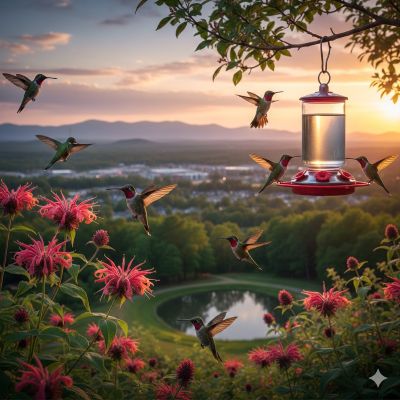
The buzz of spring is nearly upon us as the Upstate prepares for the arrival of its smallest and most energetic seasonal visitors. As of late February 2026, the ruby-throated hummingbird migration is officially underway, with the first waves of these tiny travelers already being tracked across the Gulf Coast and into the deep South.
When to Watch the Skies
While the migration typically hits the peak “arrival zone” for South Carolina in mid-March, early scouts—usually the brightly colored males—can appear in the Golden Strip as early as the first or second week of March. These early arrivals are on a mission to establish breeding territories before the females follow roughly 10 to 14 days later.
By early April, residents in Mauldin, Simpsonville, and Fountain Inn should expect to see a significant increase in activity at backyard feeders.
Preparing Your Backyard Pit Stop
For a bird that weighs less than a nickel, the journey from Central America is an incredible feat of endurance. To help them recover, wildlife experts recommend getting your “refueling stations” ready now.
-
Hang Feeders Early: Have your feeders cleaned and filled by the first week of March. Early arrivals may struggle to find natural nectar sources if the spring bloom is late.
-
The Perfect Recipe: Stick to the gold standard of one part white granulated sugar to four parts water. There is no need for red dye, which can be harmful to the birds; the red accents on your feeder are usually enough to catch their eye.
-
Cleanliness Matters: In the Upstate’s warming spring temperatures, sugar water can ferment quickly. Be sure to clean your feeders every few days to prevent mold and bacteria growth.
Native Plants for a “Floral Highway”
If you’re looking to provide more than just sugar water, consider adding native plants to your landscape that act as a “floral highway” for migrating birds. Trumpet honeysuckle, bee balm, and cardinal flowers are local favorites that provide high-quality natural nectar.
Local nurseries are already stocking up on spring perennials. Providing a mix of feeders and flowers ensures these aerial acrobats have exactly what they need to thrive during their stay in South Carolina through the early fall.