









Echoes & Insights: The Vision That Built a Town — William Plumer Jacobs and Clinton’s Enduring Legacy
February 25, 2026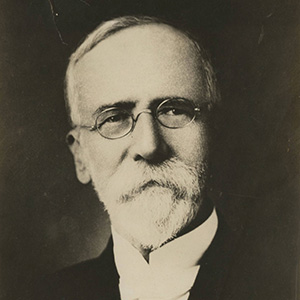
FEBRUARY 2026 COLUMN
Echoes & Insights: The Laurens County Series. Readers are invited to journey through the history of Laurens County, uncovering the stories, places, and people that have shaped our community. This series is designed to preserve history while sparking conversation about how it continues to guide us today.
We’d like to thank our Founding Sponsors for making this series possible. Their support ensures that the stories of our county are remembered, celebrated, and passed on to future generations.





Echoes & Insights: The Vision That Built a Town — William Plumer Jacobs and Clinton’s Enduring Legacy
Long before Clinton became recognized as a hub of faith, education, and service, a single pastor’s bold vision began shaping institutions that would impact generations to come. Years before the city gained distinction as a college town or as the home of one of the Southeast’s most respected child- and family-service ministries, a young Presbyterian minister arrived with a deep conviction that faith should be expressed through action. The Rev. William Plumer Jacobs did far more than lead a congregation — he ignited a movement that transformed the community and established a legacy that remains visible more than a century later.
Born in 1835, Jacobs was called in 1864, during the final year of the Civil War, to serve First Presbyterian Church in what is now Clinton. The region was scarred by conflict, economic hardship, and uncertainty about the future. Yet Jacobs saw opportunity amid devastation — a chance not only to rebuild structures, but to restore hope and stability to families struggling to recover.
Faith Put Into Action
In the difficult years following the war, Jacobs encountered children who had been left orphaned or vulnerable by poverty, illness, and loss. Rather than accept these circumstances as inevitable, he responded with decisive action. In 1875, he founded the Thornwell Orphanage, named for theologian James Henley Thornwell, creating a place where children could receive not only shelter, but education, guidance, and a sense of belonging.
What began with a small group of children soon grew into a respected Presbyterian child-care institution in the South. Jacobs believed that every child deserved stability, moral formation, and the opportunity to build a meaningful future. His emphasis on education, structure, and faith-centered care laid the foundation for what Thornwell continues to provide today.
More than simply meeting immediate needs, the institution helped define Clinton as a community marked by compassion and service. Generations of staff, supporters, and families became part of a mission far larger than the town itself.
A College for Leadership and Opportunity
Jacobs’ vision did not stop with caring for children. He also believed deeply in the transformative power of higher education. At a time when opportunities for college study were limited — especially in rural areas — he advocated for a school that would prepare young people for leadership in ministry, education, business, and public life.
In 1880, Presbyterian College was founded in Clinton, becoming one of the major institutions to emerge from Jacobs’ influence. While the college was not created solely for Thornwell residents, Jacobs envisioned both institutions as complementary expressions of a broader mission — caring for vulnerable children while also preparing young people for lives of service, character, and leadership.
Together, Thornwell and Presbyterian College helped create a foundation for the town’s growth. They brought educational opportunity, employment, cultural enrichment, and regional recognition, shaping Clinton into a place where faith and learning work hand in hand.
Shaping the Character of Clinton
Few individuals leave such a comprehensive imprint on a community. Jacobs’ work influenced not only institutions, but the very character of Clinton itself. Churches, schools, civic organizations, and local traditions developed within a culture shaped by his emphasis on compassion, education, and moral responsibility.
As the town grew, these values attracted families seeking stability and opportunity. Businesses followed, neighborhoods expanded, and Clinton evolved into a vibrant community whose influence reached well beyond Laurens County.
Jacobs continued to lead Thornwell for decades while remaining deeply involved in the life of the college and the church. His leadership blended pastoral care with practical administration, ensuring that his vision would endure long after his lifetime.
An Enduring Legacy
Rev. William Plumer Jacobs passed away in 1917, but the institutions he founded continue to serve thousands of individuals each year. Thornwell has expanded its mission to support children and families in a variety of ways, while Presbyterian College remains a cornerstone of higher education in the region.
Walk through Clinton today, and Jacobs’ legacy is unmistakable. Students crossing campus lawns, families receiving support through Thornwell’s programs, church bells ringing on Sunday mornings — all reflect a vision first articulated more than 150 years ago.
Echoes That Still Resound
History often remembers grand events and famous figures, but communities are more often shaped by individuals whose influence unfolds quietly across generations. William Plumer Jacobs was one such figure. His work reminds us that lasting change rarely comes from a single achievement, but from sustained commitment to serving others.
As this Echoes & Insights series looks to the past, Jacobs’ story offers a powerful illustration of how one person’s vision can ripple outward across time. In the echoes of his faith and determination, we see the insights of a community transformed — in the institutions he founded, the countless lives they have touched, and the enduring character of the town that grew around them.
Clinton did not become a center of faith and education by accident. It grew from the conviction that compassion and knowledge could change lives, a conviction embodied in the life of one determined pastor.
As we reflect on the echoes of our past and the insights they offer, we are reminded that the story of Laurens County is still being written. By preserving these memories and sharing these stories, we honor those who came before us while inspiring future generations to continue building a community rooted in resilience, service, and hope.