Timeless Georgetown: The Story of the SC State Flag
April 28, 2026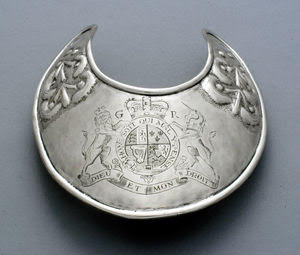
By Mary Boyd
Timeless Georgetown is a series dedicated to the rich history and stories that shaped Georgetown, South Carolina—the third-oldest city in the state. From the strategic maneuvers of the Revolutionary War to the cultural evolution of the “Rice Coast,” we explore the legends and landmarks that define our heritage. Join us as we look beyond the modern landscape to discover the people and events that paved the way for the Georgetown we know today.
The South Carolina State flag has been in transition ever since Colonel William Moultrie assembled a banner of dark blue with a crescent shape in the upper left corner in 1776. The color was from the patriot uniforms and the crescent was from a similar shape worn on the caps of soldiers with the word “LIBERTY” inscribed.
Going back even further, the deep blue color came about from the indigo dye industry. The indigo plant adapted well to Georgetown County and soon made our local growers very wealthy with a bounty from the British. This was the first lucrative industry for this area. The dark blue color was chosen for the military uniforms of our Revolutionary patriot soldiers and for our state flag.
The crescent shape came from the symbol worn on South Carolina’s soldier’s caps. It certainly does resemble a phase of the moon, but in early flags the pointed ends wrapped more toward the center, a little farther than the crescent moon does. This lends credence that it was from a piece of protective metal worn over the upper chest area to protect the heart. It was called a gorget, (pronounced gor ZHAY). Ancient warriors wore them suspended from a chain or cord around their necks and proved very effective. By the time of the Revolutionary War, they were more symbolic of an officer’s rank. Francis Marion is seen wearing a thinner one in many of the drawings and statues of him.
In his memoirs, Colonel William Moultrie wrote, “A little time after we were in possession of Fort Johnson, it was thought necessary to have a flag for the purpose of signals as there was no national or state flag at that time. It was desired by the council of safety to have one made, upon which, as the state troops were clothed in blue, and the fort was garrisoned by the first and second regiments, who wore a silver crescent on the front of their caps; I had a large blue flag made with a crescent in the dexter corner, to be in uniform with the troops.”
This flag was flown in June of 1776 in the defense of a new fortress on Sullivan’s Island, when Moultrie faced off against a British fleet that had not lost a battle in a century. His decision to construct the fort out of palmetto logs was inspired and protected the fort beautifully. The spongy fiber of the logs absorbed or repelled cannon balls very effectively.
On June 28, 1776, the flag was shot down, but Sergeant William Jasper ran out into the open, raising it and rallying the troops until it could be mounted again. This gesture was so heroic, saving Charleston from conquest for four years, that the flag came to be the symbol of the Revolution and liberty. 
In 1860, when South Carolinians were contemplating seceding from the Union it fought to create, a new banner was needed. The General Assembly considered several options, but the indigo and gorget were enduring symbols of our Colonial days. Honoring the use of the palmetto logs at Fort Moultrie, the Palmetto Tree was added in 1860, white against the indigo background. The South Carolina legislature has never officially adopted any flag to represent our state, so several versions are available, but all look very similar. The palmetto trunk is somewhat thicker, the mane of fronds is sometimes “fluffier” but all are immediately recognized as the South Carolina flag. Long may she wave.
About the Author
Mary Boyd is a dedicated local historian with a deep passion for preserving and sharing the rich narrative of Georgetown County. She is associated with the Georgetown County Historical Society Museum and the Francis Marion Interpretive Center. Boyd welcomes queries about Georgetown’s history and heritage at info@georgetowncountymuseum.