Dirt on the Strip: Taking Your Garden to the Next Level (Literally)
May 11, 2026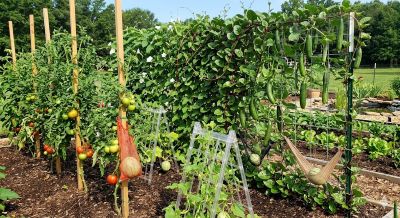
If your garden is anything like mine this week, the tomatoes are starting to stretch and the cucumbers are looking for something to grab onto. We promised a deep dive into vertical gardening, and since space in our suburban “Golden Strip” plots is often at a premium, going up is the smartest way to grow more in less room.
Whether you’re working with a sprawling backyard or a handful of containers on a patio, here is how to master the vertical climb this week.
The Vertical Advantage: Why Go Up?
In the Upstate’s humid climate, vertical gardening isn’t just about saving space—it’s about survival.
-
Airflow: Elevating your plants keeps them away from the damp soil where fungal diseases like powdery mildew thrive.
-
Pest Control: It’s much easier to spot those bronze squash bug eggs (the ones we talked about last week!) when they are at eye level rather than hidden in a tangled heap on the ground.
-
Cleaner Harvest: Your fruit stays off the dirt, meaning less rot and easier picking.
Trellis Tech: Matching the Support to the Plant
Not all vertical supports are created equal. This week, take a look at what you’re growing and match it to the right structure:
-
The Heavy Lifters: For cantaloupes, small watermelons, or heavy squash, you need a sturdy “A-frame” trellis or cattle panels. Pro-tip: Use old pantyhose or mesh onion bags to create “slings” for the fruit so they don’t snap off the vine as they get heavy.
-
The Twiners: Pole beans and morning glories wrap their stems around supports. A simple teepee made of bamboo stakes or even heavy-duty twine dropped from a porch rail works wonders.
-
The Grabbers: Peas and cucumbers use tiny tendrils to pull themselves up. They need thin supports like wire fencing or netting. If your fence is too thick, they won’t be able to “hold on.”
In the Dirt: What to Plant Vertically Now
If you have a bare fence or a trellis waiting for a tenant, get these in the ground this week:
-
Malabar Spinach: This isn’t a true spinach, but it tastes like it and loves our SC heat. It’s a beautiful vine with red stems that will cover a trellis in no time.
-
Armenian Cucumbers: These are technically melons but look and taste like giant, crunchy cucumbers. They are incredibly prolific when allowed to climb.
-
Moonflowers: For a bit of evening magic, plant these near your seating area. They open at night and have a heavenly scent that loves the Upstate evening breeze.
Maintenance Task: The “Training” Session
Plants don’t always know they are supposed to go up. This week, spend ten minutes “training” your vines. Gently weave the new growth through your trellis or use soft garden ties to secure them. Be careful not to tie them too tight—those stems need room to thicken up as they grow!
Weekly Pro-Tip: The “Vining” Tomato Myth
Remember, Indeterminate tomatoes are actually vines, not bushes. If you let them grow on the ground, you’re asking for rot. If you haven’t already, get those tall 5-foot cages or “Florida Weave” stakes in place today. Your back (and your BLTs) will thank you in July.
Are your vines reaching for the sky yet? Send us a photo of your creative trellis solutions! Next week, we’re talking about the “June Jump”—how to feed your garden to survive the upcoming heatwaves.