Timeless Georgetown: The Elusive Swamp Fox
May 13, 2026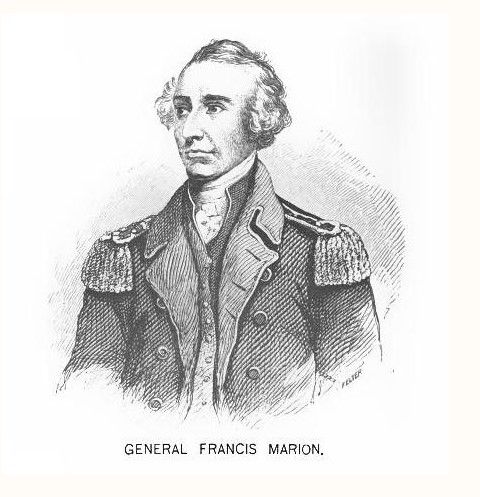
By Mary Boyd
Timeless Georgetown is a series dedicated to the rich history and stories that shaped Georgetown, South Carolina—the third-oldest city in the state. From the strategic maneuvers of the Revolutionary War to the cultural evolution of the “Rice Coast,” we explore the legends and landmarks that define our heritage. Join us as we look beyond the modern landscape to discover the people and events that paved the way for the Georgetown we know today.
Almost everyone in South Carolina knows about Francis Marion, the legendary American patriot general of the Revolutionary War in South Carolina. Born in Berkeley County in 1732, he grew up in Georgetown, probably on a farm nearby. He developed a fascination with ships and even sailed aboard a schooner at the age of about 15. After suffering the traumatic event of being adrift in a lifeboat for a week, he gave up his dreams of a sea-faring life.
He instead began to explore the swamps and back country on hunting and fishing expeditions. From these remote areas, he was later able to base his encampment and successfully fight the British and Loyalists (Americans who chose to fight for the King, Tories). 
After serving in the campaign against the Cherokee in 1758, he returned to the life of a planter along the Santee River. In 1775 with hostilities rising against the British, Francis was again called to duty and in June of 1776 found himself at Fort Moultrie during a British naval attack. Thus began his illustrious career as one of the most effective military leaders in South Carolina history. His intimate knowledge of the swamps and back country proved invaluable in his ability to attack and melt away into terrain where no British soldier would dare step.
A legend stated that British General Banastre Tarleton, upon chasing Marion and his men yet again into the swamps, raised his fist at the fleeing Marion and reportedly yelled, “You wily Swamp Fox, only the devil can get you.”
It may be true, but it may be an invention of author Parson Weems in his writings of Francis Marion. Weems invented the story of George Washington cutting down the cherry tree, another flight of fancy.
When the war ended, his Pond Bluff plantation in Berkeley County was in ruins, having been plundered by both sides. Almost penniless and having never been paid for his services with the militia, he was able to get his plantation into a workable state. He was finally awarded a gold medal by the State Senate in 1783 and was given a comfortable salary as Commandant of Fort Johnson.
On April 20, 1786, he married Mary Esther Videau, his first cousin. Although the marriage was a happy one, they remained childless. With Mary’s family fortune, he was able to resign his post as Commandant of Fort Johnson and build a new house at Pond Bluff. He remained active in community life, helping to draw up the State Constitution in 1790. Although in declining health, he was still active in the militia until 1794. His final days were spent visiting friends and former colleagues. He died on February 27, 1795, and is buried in Berkeley County.
Francis Marion did have a talent for guerilla tactics, but his real greatness was that he was never infected by the spirit of cruelty and revenge that usually accompanies such fighting. His epitaph states he “lived without fear and died without reproach.”
There is much more to the story of Francis Marion, how he “walked on water,” his secret signals, and his physical appearance. You can experience this for yourself by visiting the Georgetown County Museum, which has been designated by the State of South Carolina as the Francis Marion Interpretive Center. It’s open Tuesday through Saturday from 11:00 am – 3:00 pm. You will be totally amazed by the story of Francis Marion!
About the Author
Mary Boyd is a dedicated local historian with a deep passion for preserving and sharing the rich narrative of Georgetown County. She is associated with the Georgetown County Historical Society Museum and the Francis Marion Interpretive Center. Boyd welcomes queries about Georgetown’s history and heritage at info@georgetowncountymuseum.