From Backcountry Skirmishes to the Semiquincentennial: The Golden Strip’s Crucial Role in Shaping Early America
June 24, 2026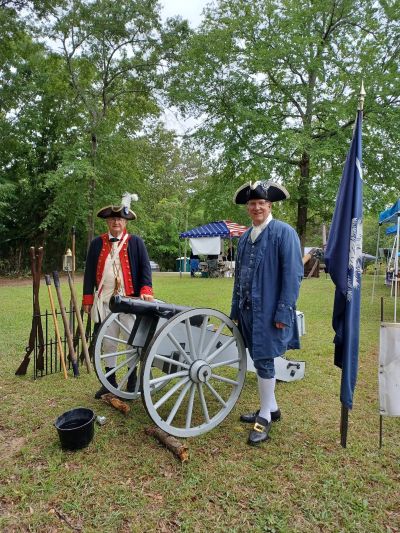
As cities across the nation gear up to honor America’s 250th anniversary, residents of Mauldin, Simpsonville, and Fountain Inn don’t have to look far to find the roots of the American Revolution. Long before the region earned its modern moniker as the “Golden Strip”, the rolling hills of southern Greenville County served as a volatile, vital frontier where the fate of a fledgling nation hung in the balance.
While standard history books heavily spotlight major campaigns in the North or coastal clashes like Sullivan’s Island, historians emphasize that the independence of the United States was forged through the grit and strategic victories won in the South Carolina Backcountry.
The Battle of Great Cane Brake: Greenville County’s Pivotal Clash
The foundational impact of the Golden Strip on the creation of America centers around a swampy, cane-dense thicket near the modern border of Simpsonville. On December 22, 1775—months before the signing of the Declaration of Independence—the Battle of Great Cane Brake took place, marking the only Revolutionary War battle fought entirely within the geographic boundaries of what is now Greenville County.
The conflict was a crucial piece of the “Snow Campaign,” a massive Patriot mobilization aimed at neutralizing rising Loyalist resistance in the Upstate backcountry. Hundreds of Patriot militia forces under Colonel Richard Richardson and Major William “Danger” Thomson executed a surprise dawn raid on a camp of Loyalists led by Patrick Cunningham.
The engagement resulted in a decisive Patriot victory, scattering Loyalist forces and securing a crucial period of stability for the region, allowing South Carolina to establish its first provisional constitution in early 1776 without the immediate threat of a localized civil war.
Land Grants and the Birth of Freedom’s Footprint
Following the formal conclusion of the Revolutionary War, the very landscape of the Golden Strip was transformed by the veterans who fought for it. Prior to the war, much of the Upstate remained Cherokee territory. However, after 1783, the newly formed state of South Carolina began issuing extensive land grants to Patriot soldiers as payment for their wartime military service.
These bounties drew a wave of battle-tested veterans and their families to the fertile soils of southern Greenville County.
-
Mauldin’s Origins: In 1784, early settler Benjamin Griffith was granted a 100-acre tract that would eventually evolve into the heart of modern-day Mauldin.
-
Fountain Inn & Simpsonville Homesteads: Scores of former soldiers established small family farms, grist mills, and churches across the region, building the bedrock of early American commerce and civic structure in the wilderness.
Today, the physical remains of these early patriots lie in quiet, historic church yards and family cemeteries scattered along the Golden Strip.
Preserving the Legacy
When the fireworks illuminate the skies over Heritage Park, BridgeWay Station, and Main Street next week, they aren’t just lighting up a modern metropolis—they are honoring the very ground where early Carolinians fought to turn the dream of a free America into a reality.
Remembering the Battle of Great Cane Brake offers a look at local historical reenactors and descendants keeping the memory of this foundational Upstate battle alive for the community.