








Dubno wins Governor’s Award for Excellence in Science
April 16, 2018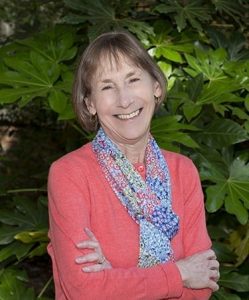
On April 11, Gov. Henry D. McMaster presented Judy R. Dubno, Ph.D., the state’s highest honor: the Governor’s Award for Excellence in Science.
Dubno is considered one of the premier scientists in the country who studies hearing loss and aging. She is a professor in the MUSC Department of Otolaryngology-Head and Neck Surgery and serves as the director of the hearing research program.
This prestigious award is presented to a scientist whose contributions to scientific discovery merit special recognition and have affected the respective discipline on a national and international basis.
The quality of Dubno’s work is demonstrated by the continuous funding she has received for more than 30 years. She’s the primary investigator on a coveted National Institutes of Health Research Project Grant, now in its 37th consecutive year of support. Hers is the longest-funded grant in the United States related to age-related hearing loss.
During her tenure at MUSC, she has brought more than $70 million to the institution. In addition to providing critical insights into the subject of hearing loss in the aging, this funding also has allowed for the employment of more than 100 research students and technicians. Most of the students have launched successful research careers, having had the opportunity to work so closely with Dubno.
Dubno ‘s research program has been ranked near the top in the nation for NIH funding in Departments of Otolaryngology over the last decade. “Her experience and expertise have been invaluable in fostering the research careers of many faculty within our department. This has been a key component of our national ranking as #11 Best Otolaryngology Departments in the country by U.S. News & World Report,” said Paul R. Lambert, M.D., professor and chairman of the Department of Otolaryngology-Head and Neck Surgery.
Widely acknowledged as an auditory scientist for her expertise in hearing loss and aging, Dubno has served as a leader in scientific societies and worked extensively in public policy related to hearing loss to improve access and affordability of hearing-loss treatments.
Dubno was recruited from UCLA in 1978 to help establish a research program in hearing at MUSC. At that time, there was growing recognition nationally that hearing loss was a major disability for older citizens, a problem that has only worsened in the ensuing decades, as baby boomers continue to reach senior status.
Today, it is estimated that 15 percent of individuals 18 years of age or older have some trouble hearing. This number increases to 25 percent for individuals ages 65 to 74 and over 50 percent for those 75 and older, according a 2010 report published by the National Institute of Deafness and Other Communication Disorders. The consequences of hearing loss are significant, said Dubno. In addition to the obvious safety issues, studies demonstrate an increased incidence of isolation and depression and possibly an accelerated cognitive decline in patients with hearing impairment.