



Hurricane Helene: One Year Later
September 29, 2025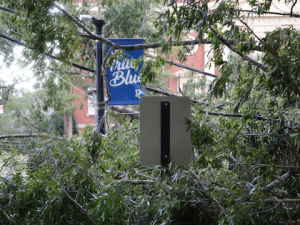
Presbyterian College reflects on resilience, lessons learned, and the enduring PC Spirit
One year after Hurricane Helene tore through the Southeast and left Presbyterian College’s campus battered but unbroken, the college community continues to reflect on its remarkable response and the lessons learned from the storm.
When the storm struck on Sept. 27, 2024, PC endured widespread damage. Stately oaks toppled. Buildings suffered water and wind damage. Power and communications were knocked out. Yet, amid the debris and uncertainty, the PC Spirit prevailed.
“Looking back a year later, I could not be prouder of how our campus came together,” said PC president Dr. Anita Gustafson. “Hurricane Helene tested us in ways we could not have anticipated, but it also revealed the very best of who we are – resilient, compassionate, and committed to caring for one another. The lessons we learned continue to strengthen our college today.”
Campus response
In the immediate aftermath, safety was the top priority. With communications down, administrators and staff formed an emergency operations team the old-fashioned way – meeting in person at set times and locations. The slogan quickly became “PC Pivot,” as plans shifted repeatedly to meet changing needs.
Vice president of student affairs and dean of students Dr. Andrew Peterson remembered arriving on campus the morning of the storm after his own neighborhood lost power.
“By the time the storm subsided, I couldn’t even get home for hours because of downed trees. My house had no electricity for 10 days,” he said.
To stay close to students, he moved into Clinton Hall, where the darkness and silence of the first nights were “unsettling” and punctuated by false fire alarms when systems lost backup power.
Despite those conditions, Peterson said he drew inspiration from his team and the students themselves. Resident assistants volunteered to stay on duty, even when their own homes were impacted.
“Our staff never questioned whether they would be there for students during the darkest—literally—of times,” Peterson said.
Restoring campus
Thanks to auxiliary services director Jason Koenig and AVI general manager Kirtley Baez, students never missed a hot meal, even when power was out.
Koenig recalled balancing his role on campus with being a caregiver for his elderly parents.
“My wife and daughter were superstars taking care of my parents while I focused on making sure our students were fed,” he said.
Koenig and his team worked quickly to secure food and supplies, even arranging for a refrigerated truck to shuttle meals back and forth from Columbia when deliveries couldn’t get through.
“Talking with students at meal times became a bright spot for me,” Koenig said. “We were all stuck together, and those conversations were a reminder of the community we had even in the middle of the storm.”
Meanwhile, crews led by facilities director Trent Roark worked tirelessly to clear fallen trees, repair damage, and restore utilities. The Budd Group helped return the grounds to safety and beauty. Technology services, led by Kevin Crider, restored network connections once electricity returned, reestablishing the digital lifeline of the campus.
This fall, at the college’s Opening Day gathering for staff and faculty, Roark was named PC Staff Member of the Year in large part due to his hard work and dedication following Helene. Gustafson told the assembly about Roark returning to campus late at night to ensure that no one was stuck in one of the elevators on campus—a testament to his sense of duty even under treacherous conditions.
Students leading the way
Perhaps the most powerful example of resilience came from PC’s students. True to the college’s motto, “While We Live, We Serve,” they turned outward to help the community.
More than 200 students – including entire athletic teams – volunteered in neighborhoods, parks, and at Thornwell. They cleared debris, hauled branches, and lent strength and encouragement to residents hit hardest by the storm.
Peterson recalled one memorable scene just after the winds calmed.
“I walked down Calhoun Street and heard shouting,” he said. “What I found was a huge group of students playing kickball in the new apartments’ courtyard. Their laughter reminded me that even when technology and comforts are stripped away, we find joy in each other,” he said.
Students also recognized how fortunate the campus was compared to surrounding communities. Some volunteered for search, rescue, and support efforts in Asheville and other nearby areas, putting service into immediate action.
A legacy of resilience
For Koenig, Helene brought back memories of another storm decades earlier.
“In 1989, when Hurricane Hugo hit Charlotte, we were without power for 13 days,” he said. “Experiencing Helene took me right back to that year. You truly relied on your neighbors and family then, and it was the same lesson again here – community is everything,” he said.
Today, one year later, the campus has not only recovered but also grown stronger. Many of the lessons from Helene – the importance of flexible planning, the need for clear communication channels, and the resilience of students and staff alike – are now embedded in the college’s approach to crisis management.
Gustafson said those lessons extend far beyond emergency preparedness.
“Hurricane Helene reminded us that buildings can be rebuilt and new trees planted, but the true heart of Presbyterian College lies in its people,” she said. “The courage, generosity, and determination I witnessed last year will remain a part of our story for generations to come.”