



Tearing Down A School
November 13, 2015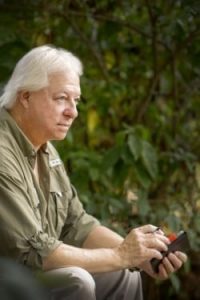

By Tom Poland
Memories Rise From The Rubble
We all have time machines. We call the ones that take us back in time memories. When I drove by my elementary school back in Lincolnton, Georgia, recently, the sight of it being razed took me way, way back. In a flash, I found myself traveling back to the 1950s. I lose track of exactly what classes took place in which wings, but the overall spot those wings occupied gave rise to a lot of memories. Those buildings wielded a huge influence on me, one that continues to this day.
I may forget something trivial that took place a week ago, but I retain clear mental pictures of events that took place when I was six on up to thirteen, the years I spent in those wings now turned to rubble as you can see. Rising from the rubble, I see the faces of teachers and classmates. I see blackboards, desks, and more.
Let’s begin with my first day in school. I did not want to go. I’m not sure why, other than the fact that a portion of my childhood was spent in the hospital due to an accident. I can best guess that early in life I came to mistrust strangers. When I entered first grade, that’s what I saw: strangers. I remember being upset, crying as little boys will do, and I ran from class and wrapped my arms and legs around a red metal pole that supported the first grade wing’s overhang. My mom had to pry me loose from that pole and take me back into the room where a teacher by the name of Ruth Armstrong was in charge. I got past opening day and settled into a routine that would dictate the rhythm of life: school, rides on yellow Bluebird buses, and summer vacations.

I took in my new surroundings. The ceiling of our room appeared to be a glued mix of black, gray, and white wood fibers. Years later, I would hear that it was full of asbestos but I have no idea if that was a rumor or truth. Beneath that ceiling we sat in our tiny desks using thick, stubby black pencils making letters on blue-lined ruled paper that was coarse and pulpy. We did our lessons in Blue Horse notebooks. Remember those?
The sink in the back of the room was close to the floor. When Mrs. Armstrong, a short, plump lady, leaned over to wash her hands, her skirt would ride up exposing sights children were better off not seeing. It was my introduction to a thing called cellulite.
I recall one classmate, Nancy McWhorter, from that class. Mrs. Armstrong praised her for her neat, within-the-lines colorings of oranges and apples. “Never,” I thought, “could I create something as beautiful.” Besides colors, fragrances come to me too. Seems the leathery and plastic smell of leather-vinyl Roy Rogers book satchels blended with bananas that students brought as snacks. The smell of ink and paper, too, pleased me. That fragrance would continue to please me through the ages whenever I entered a bookstore, that vanishing species of store like no other. First grade came and went, a blur of smells, lunches, books, pencils, recesses, and lessons. We were on the road to civilization. Other stops lay ahead.
In those wings I passed from the first grade to the eighth. I like to think that I had fabulous teachers in those wings now being reduced to dust and debris. Their names are familiar still: Willie Ruth Freeman, Helen Turner, Mary Faith Partridge, Azalean Wansley. Mrs. Turner led us through reading and writing laboratories. Mrs. Freeman revealed the wonders of science to me, due in large part to the Soviet Union. When it put sputnik into orbit in October 1957, our curriculum changed overnight and a heavy emphasis on science and math arrived.
Other memories surface as I ride this time machine spurred to life by the sight of backhoes clobbering bricks. After lunch, we would take naps on brown drycleaner bags. During recesses, we’d explore the old coal bin in the infamous Green Building. At other times, we’d swing at the playground at the end of the football field and explore a small stream that must have been wiped out by the arrival later of a new street, Lillian Sims Avenue.
On a lucky day, we’d line up and march to the film room to watch a 16-millimeter film. Generally, it had wavering lines where the celluloid had been scratched and often the film stuck in an old Bell and Howell projector and a hole melted in the frame. We didn’t mind. Going to that film room was like a day at a film festival.
I have no bad memories from those buildings, aside from my first day ever in public school. A fever might take hold and Mom would come get me, but most days unfolded in an ordinary manner in a most extraordinary place.
The decades they do extract a toll. What’s new becomes old, and what’s old in time becomes unnecessary. When folks say you can’t miss something until it’s gone, they are right as rain as Dad used to say. I’ll never drive by the site of those old buildings that I don’t see myself in those rooms learning things that would serve me the rest of my life. You, who are reading these words, did you pass through a similar school now gone? If so, my fellow time traveler, we share a special connection.
A former student, now friend, is working on a memoir about her ancestors who came here from Italy. For her, she says, everything goes back to Ellis Island where her great, great grandfather first set foot in this country. Others and I will keep going back to those simple, brick school buildings where we studied history, science, English, math, and more. It was there that we first made friends, first had crushes, and there that we first had brushes with bullies and whatever discipline a teacher might mete out. It was there that we took tests and found out that all people are not created equal no matter what folks tell you. Whatever it is that we became, those long-gone schoolrooms and the teachers who filled them all had a hand in our making.
Visit Tom Poland’s website at www.tompoland.net
Email Tom about most anything. [email protected]
Tom Poland is the author of eleven books and more than 1,000 magazine features. A Southern writer, his work has appeared in magazines throughout the South. The University of South Carolina Press has released his and Robert Clark’s book, Reflections Of South Carolina, Vol. II. The History Press of Charleston just released his book, Classic Carolina Road Trips From Columbia. He writes a weekly column for newspapers in Georgia and South Carolina about the South, its people, traditions, lifestyle, and changing culture.
Sign up here to start your free subscription to MidlandsLife!