Museum around the Corner: Georgetown County Historical Society Museum
June 1, 2026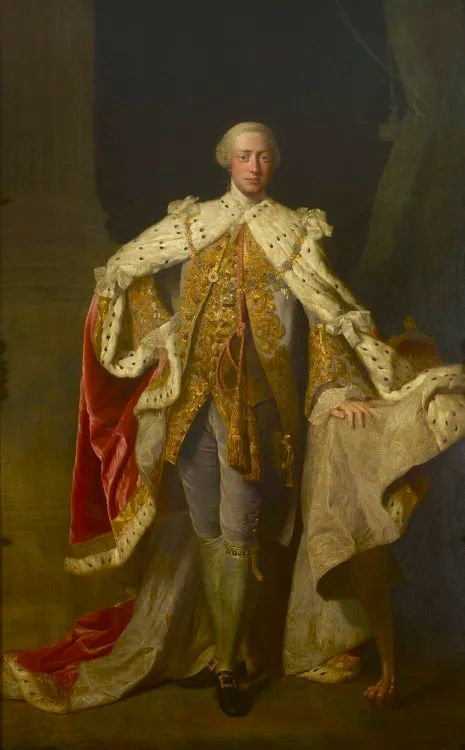
By Mary Boyd
George, Prince of Wales, ascended to the throne of Great Britain in June of 1727. This was a busy time for the Colonies. Towns were springing up in the land grants of the Lords Proprietors and parishes settled and named. Lands were being bought and sold in vast tracts. The Parish of Prince George was founded in 1721 and named after the young prince, George, Prince of Wales, thus Prince George Parish, Winyah. Its bounds were from the Santee River north to the Cape Fear River, the Atlantic Ocean on the east, and as far west as His Majesty’s subjects were found. George’s coronation was on October 27, 1727 after George I died.
The geographical term “Winyah” (an Indian name) was attached to this new Parish, so the full title of this area was the Parish of Prince George, Winyah, Church of England. There were several locations in the colonies being named after the Prince, so the geographical name was necessary. The parishes were considered political entities as well as religious. Candidates for election had to be landowners and ran for office in the Parish in which they lived.
King George II and his wife Caroline, had eight children, the first son being Frederick. Young Frederick was the next Prince of Wales, but because of extreme ill feelings between parents and son, Frederick never ascended to the throne. Frederick died unexpectedly in 1751, nine years before his father, so George II was ultimately succeeded by his grandson, George III.
When Frederick and wife Caroline were expecting their first child, Frederick spirited his wife, while in labor out of the castle to give birth, saying that he would not have his child born under the same roof as his parents. It was customary for the Queen to be present for any birth so as to prove that the child was born healthy and was the legitimate heir to the throne. That did not happen in this case, but the child was a girl, so no problem arose as to whether the potential heir to the throne could be of questionable parentage, as children were sometimes secretly substituted if an infant died. Being a girl, she was not in line to reign, anyway.
A second child was indeed a boy, and became George, Prince of Wales, who grew up to be King George III, succeeding his grandfather, George II. George III was the monarch during the American Revolutionary War.
In 1734, Prince George Parish was divided and Prince Frederick Parish was carved out to the north and northwest of Georgetown District. This new parish was named for Frederick, Prince of Wales. In 1767, Prince Frederick Parish was divided and All Saints Parish was formed. The prosperity of these three parishes later became such that Georgetown County was the wealthiest county in the entire United States, and therein lies another story.
The Georgetown County Museum is located at 120 Broad Street, right around the corner from Front Street. Hours are Tuesday through Saturday from 11:00 to 3:00 We have free admission and donations are gratefully accepted.
About the Author
Mary Boyd is a dedicated local historian with a deep passion for preserving and sharing the rich narrative of Georgetown County. Mary is closely associated with the Georgetown County Historical Society Museum. She is a frequent contributor to local historical research and warmly welcomes queries from the community regarding Georgetown’s unique history and cultural heritage.
Get in Touch: For questions or to learn more about the museum’s collections, you can reach Mary at: [email protected].