









Hear about veterans’ experiences during and after the Vietnam War
June 3, 2026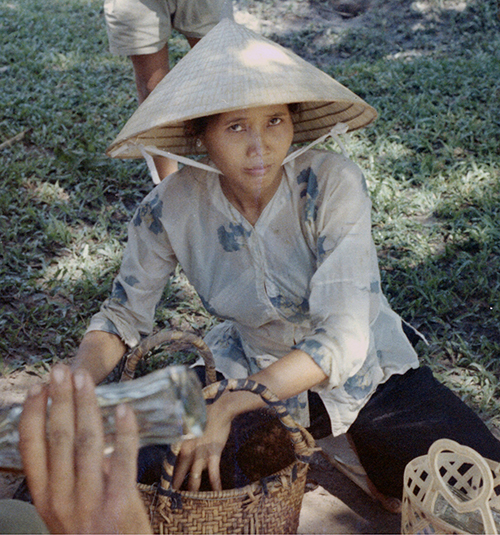
C.W. Bowman has often fascinated Midlands audiences with chilling stories of his service as a Tunnel Rat in Vietnam. Now, he’s ready to share an equally compelling human-interest account of his return, three decades later, to the village where he had been stationed — and where upon his return, he made good friends for life.
Bob Feller was a combat engineer in the U.S. Army’s 25th Infantry Division, in the same part of Vietnam as Bowman, but about a year later. He was in charge of building bridges – both the physical kind and the human sort, since these structures were often for villages whose bridges had been blown up. Since he put them up in 1968-69, people were shooting at him and his men while they worked.
Hear them both, and see and learn more about that war and its impact on America, when the South Carolina Confederate Relic Room and Military Museum unveils a new all-day Special Saturday program, “Vietnam Day,” running from 10 a.m. to 3 p.m. on June 20, 2026. Admission is free, not only to the event but to the entire museum at 301 Gervais Street. That means that if you haven’t yet seen the museum’s sprawling Vietnam exhibit – “A War With No Front Lines: South Carolina and the Vietnam War, 1965-1973” – this is a perfect opportunity to do so.
On that day, you will be greeted as you arrive in the Atrium by Vietnam-era Living History re-enactors, providing explanations of war artifacts displayed on numerous tables. Proceed through the museum, and you will find the two speakers in the Education Room. Bob Feller will speak in the morning, and C.W. Bowman in the afternoon. Here’s what they’ll talk about…
“I was drafted after I graduated from the University of Virginia,” remembers Feller. The Army gave him a choice of what kind of officer he would be: Infantry, artillery or engineering. He thought that engineering sounded most attractive, “but it turned out to be more than I thought it would be.”
Veterans know that even when a shooting war is in progress, you don’t see combat for quite awhile after donning the uniform, and you often see a lot of this country before going in country. He was sent to Fort Leonard Wood in the Missouri Ozarks for the winter, and then back to Virginia for Officer Candidate School. Then he was off to an engineer battalion at Fort Lewis near Tacoma, Wash. He spent a year there.
Finally, in August 1968, he found himself in Củ Chi, South Vietnam, about 25 miles northwest of Saigon. As a 2nd lieutenant, he was a platoon leader in a bridging company, putting up temporary bridges for villages that had lost theirs to high explosives. They built a variety of bridges from the Army engineer repertoire – Armored Vehicle Launched Bridges, Bailey Bridges, floating pontoon bridges and a type that could be flown into place dangling from a tandem-rotor Chinook helicopter.
He has a short answer to the question of whether he and his men were under enemy fire while they worked: “Absolutely.”
After his tour was up, he came back, got married, and went to graduate school at the University of Washington. Having apparently had enough of engineering, he studied oceanography and marine biology.
Receiving his doctorate, he came to be a professor at the University of South Carolina, and retired in 2009.
C.W. Bowman served two tours as an infantryman in Vietnam, then returned to the States to serve as a drill instructor at Fort Jackson before leaving the Army. The recruits tended to be in awe of him. This man had been a Tunnel Rat, and was obviously afraid of nothing. But they didn’t know everything.
“I was having some problems with my Vietnam memories, PTSD, survivor’s guilt and a bunch of other stuff” when President Bill Clinton ended the embargo and opened Vietnam to American travel in the 1990s.
“I needed to go back there, and check it out,” Bowman says. He didn’t wait for a tour, or an invitation from anyone. He just acted, on a ground level – a personal level. He contacted members of a Vietnamese family that ran a tailor shop in Irmo, and they put him in touch with their nephew back in Vietnam.
Then Bowman bought a plane ticket, and went. Not that he didn’t have misgivings. As the plane landed, he put his head down and thought, “They’ll arrest me when I get off the plane for war crimes.” But the nephew and a friend were there to greet him, and he asked them to take him to Trảng Bàng, near where he had been based 30 years before.
He found he remembered the way when they got close, and told the young men where to turn to get to the village. Once they found it, they got out, with him still uncertain as to what would happen. He had a lot of pictures he had taken of villagers during the war. His young guides showed them to the villagers. One photo was of “a girl who sold cokes and beer and stuff” at the base gate.
“This one woman saw that picture and she got excited, took me by the hand and walked me up to a house like I was a child.” Inside was the woman who had sold drinks to the soldiers. She was excited, too. She said she remembered C.W. He challenged that by asking, “What’s my name?”
“Bo,” she said.
To hear the rest of the story about the deep friendship he formed with that woman and her family, and how he helped support her for the rest of her life, come to the museum on June 20. These stories are worth hearing.
About the South Carolina Confederate Relic Room and Military Museum
Founded in 1896, the South Carolina Confederate Relic Room and Military Museum is an accredited museum focusing on South Carolina’s distinguished martial tradition through the Revolutionary War, Mexican War, Civil War, Spanish-American War, World Wars I and II, Vietnam, the War on Terror, and other American conflicts. It serves as the state’s military history museum by collecting, preserving, and exhibiting South Carolina’s military heritage from the colonial era to the present, and by providing superior educational experiences and programming. It recently opened a major new exhibit, “A War With No Front Lines: South Carolina and the Vietnam War, 1965-1973.” The museum is located at 301 Gervais St. in Columbia, sharing the Columbia Mills building with the State Museum. For more information, go to https://crr.sc.gov/.