








My City Of Dust Calendar
June 3, 2026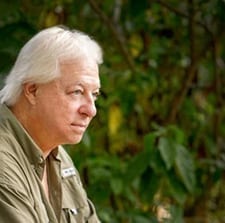
By Tom Poland
Passport To Preservation
John Mulhouse sent me his 2026 Abandoned New Mexico City of Dust calendar, and it’s a keeper. John’s beat is why. “The lost and wondrous wreckage of America. The ceaseless road to nowhere. Yeah, that’s my home.”
It’s my beat too, and John’s work gives me hope that somebody everywhere will continue to document what was. I do. Maybe you will too someday.
John lives out Oklahoma way. We’ve never met but we will. His peregrinations will bring him down South soon and we plan to meet. And how about that word, “peregrination?” I’m throwing a five-dollar word at you to convince you of my literary, learned ways. Works, I bet.
So, how did a Minnetonka, Minnesota, native end up in the Land of Grits? He came to Athens, Georgia. Like me, he’s a University of Georgia graduate. A self-taught photographer, his images possess a haunting quality. You stare and stare and wish you were there.

Abandoned New Mexico, preserved by John Mulhouse.
The calendar’s cover presents a 1937 Works Progress Administration gymnasium in Amistad, New Mexico. It possesses a kind of art deco-Apache style. Note the 19 & 37 artwork. September’s image, a poor man’s “Rainbow Row,” features North Main Street in Elida, New Mexico. Colorful but barren. Stark. A hint of trees bares no leaves. A fine layer of dust I daresay coats the limbs.
October’s image, my favorite, features a black-and-white photo of the San Geronimo de Taos Mission, 1726, in Taos Pueblo, New Mexico. It looks a bit like the cemetery in The Good, The Bad, and The Ugly, Sad Hill, near Spain’s village of Santo Domingo de Silos. A three-way standoff at Sad Hill Cemetery gave us the movie’s finale. Listen. Hear Tuco, Eli Wallach, cussing Blondie?
November’s image is so dusty it seems sepia toned. It’s a once-cozy corner in the Stratford Hotel, 1879, where Billy the Kid washed dishes. The rumpled chair seems a place where Miss Kitty would hold court, her backlit auburn hair glowing like burnished copper. The image captures decline and decay and makes me think of my great grandfather’s home, empty since 1951 when he died.
Aside from John’s work, his interests, he says, are “confusion, heartbreak, rootlessness, dark rooms, and cheap hotels.” I can relate. He likes ghost towns too, as do I. He “loves the desert, realizes it doesn’t care too much about him, and thinks that’s all as it should be.”
For a while John lived on the border of Georgialina. “I spent my mornings and nights in Georgia and my days in South Carolina. … The South is such a photogenic place.”
When he got the first comment from someone telling him about their connection to some place he had photographed, he was hooked. “Seemingly forever,” he said. “It wasn’t until one of my favorite places to find respite from the sun during bike rides in Athens—an old barn on the outskirts of town—was demolished that I started to think I should capture these places for posterity. I began by using disposable cameras with no thought for anything other than amassing the images for myself.” John, rusty scissors cut us from the same dusty cloth.
City of Dust references the dry, red dirt of Georgia that covered John’s shoes while he searched for new places to photograph. As for me, I like dust, dusting not so much. When this world as we know it is said and gone, three things will endure—rocks, unkillable bricks, and dust, the powdery flour of things gone away.
Photo by Tom Poland
Georgia native Tom Poland writes a weekly column about the South, its people, traditions, lifestyle, and culture and speaks frequently to groups in the South. Governor Henry McMaster conferred the Order of the Palmetto upon Tom, South Carolina’s highest civilian honor, stating, “His work is exceptional to the state.” Poland’s work appears in books, magazines, journals, and newspapers throughout the South.
Visit Tom’s website at www.tompoland.net
Email him at [email protected]