









South Carolina Governor Signs Fargo’s Law, Delivering Stronger Protections for Law Enforcement K-9s
June 7, 2026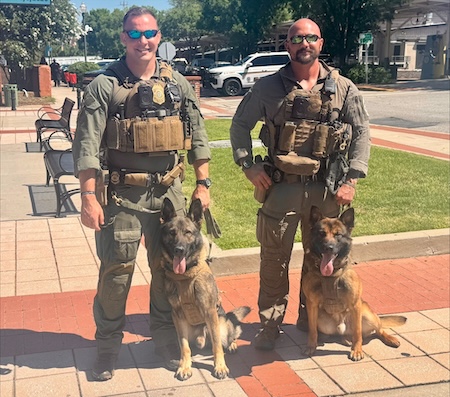
A years-long effort to strengthen legal protections for South Carolina’s law enforcement animals reached a milestone Wednesday morning, June 3rd, when Gov. Henry McMaster signed legislation honoring the K-9s who gave their lives in service to the Palmetto State.
The new law carries a name as long as the list of sacrifice behind it: Fargo’s, Hyco’s, Rico’s, Coba’s, Wick’s, Mikka’s, and Bumi’s Law. Each name belongs to a South Carolina law enforcement K-9 killed in the line of duty. The legislation is commonly referred to as Fargo’s Law, after Fargo, a Richland County K-9 shot and killed on duty in 2011 — the first law enforcement dog to die in the line of duty in state history.
The ceremonial signing took place at the 9/11 Memorial at the Columbia Metropolitan Convention Center, where state legislators and law enforcement representatives from across South Carolina gathered to mark the occasion.
The K-9s named in the law each represent a story of courage and loss. Among them: SLED K-9 Coba, shot and killed while serving a warrant; Richland County K-9 Wick, struck by a vehicle while pursuing a suspect on foot; Richland County K-9 Bumi, shot during a police chase; and Lee County K-9 Mikka, killed in a patrol car fire during a confrontation with a fugitive.
Richland County Sheriff’s Department Sgt. Warren Cavanagh, who served as Fargo’s handler, drove the bill through the state House as a tribute to the partner he lost. “He was that dog that every handler yearns to have,” Cavanagh said. “When you lose that, when you’re riding around with an empty kennel, you kind of forget what your purpose was.” He noted that nearly 15 years have passed, but the memory of that night has never faded.
The law creates meaningful new consequences for those who harm police animals. Intentionally shooting at, torturing, disabling, or killing a police dog or horse is now a felony, carrying a prison sentence of two to 15 years and fines between $2,000 and $20,000. Anyone who taunts, torments, strikes, or administers a harmful substance to a police animal faces misdemeanor charges, up to five years in prison, and fines ranging from $2,000 to $5,000. Offenders are also required to pay restitution to the law enforcement agency for veterinary costs or the replacement of an animal injured or killed in service.
Richland County Sheriff Leon Lott put the significance of the animals plainly. “They’re not just dogs,” Lott said. “A regular dog doesn’t get up and put a vest on and get in the police car and go chase bad guys. They don’t experience the danger and commitment that these K-9s make.”
SLED Chief Mark Keel said the law is ultimately about accountability and remembrance. “We honor them by holding these offenders accountable,” Keel said.
The law applies to all police dogs and horses used by law enforcement agencies throughout South Carolina.
Photo credit: SLED Facebook page