McMaster Signs ‘Fargo’s Law’ to Strengthen Protections for South Carolina Police Animals
June 15, 2026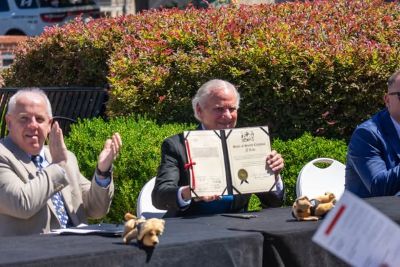
Standing alongside law enforcement leaders and K-9 handlers, Governor Henry McMaster held a ceremonial bill signing to officially enact legislation that dramatically increases criminal penalties for injuring or killing police dogs and horses.
The legislation, formally designated as H. 3034, is widely known as “Fargo’s, Hyco’s, Rico’s, Coba’s, Wick’s, Mikka’s, and Bumi’s Law.” The name honors seven South Carolina law enforcement K-9s who were killed in the line of duty. Among them is Fargo, a Richland County Sheriff’s Department K-9 who became the first police dog in state history to be killed on duty when he was shot in 2011.
“Police dogs and horses are trusted partners to law enforcement officers in some of the most dangerous situations,” Governor McMaster stated, reflecting on the critical role these animals play in public safety. “We are grateful for their service, and I was proud to sign legislation to ensure stronger protections for these animals and greater accountability for those who harm them.”
Increased Fines and Mandatory Restitution
The bipartisan bill passed through the South Carolina General Assembly with broad support, transforming how the state treats intentional harm directed at working law enforcement animals.
Under the newly updated law:
-
Felony Penalties: Intentionally shooting, killing, torturing, or disabling a police animal is now classified as a felony. Convictions carry a mandatory prison sentence ranging from two to 15 years, along with fines between $2,000 and $20,000.
-
Misdemeanor Penalties: Individuals convicted of taunting, striking, tormenting, or administering harmful substances to a service animal face misdemeanor charges, up to five years in prison, and fines between $2,000 and $5,000.
-
Financial Accountability: The law mandates that offenders pay full restitution to the impacted law enforcement agency to cover veterinary expenses, medical treatment, or the cost of training and replacing a deceased animal.
More Than “Just Equipment”
The ceremonial signing took place at the 9/11 Memorial outside the Columbia Metropolitan Convention Center, an emotional venue for the handlers present. Law enforcement officials emphasized that these animals are integral members of their respective departments, rather than mere tools.
Richland County Sheriff Leon Lott noted that a typical animal does not face the day-to-day perils that police K-9s embrace voluntarily. “They’re not just dogs,” Lott said during the event. “A regular dog doesn’t get up and put a vest on and get in the police car and go chase bad guys. They don’t experience the danger and commitment that these K-9s make.”
In addition to stricter criminal sentences, the legislation expands financial frameworks through the State Accident Fund. This provides immediate funding and authorized payments to state and local agencies for veterinary treatments, helping ease the financial burden on departments when a service animal is wounded in the line of duty.
The law is now in effect statewide, applying to all mounted patrol horses, tracking animals, and detection K-9s utilized by South Carolina law enforcement agencies.