







South Carolina House Adopts Truth in Shrimp Labeling Act, Sending Bill to Governor
June 28, 2026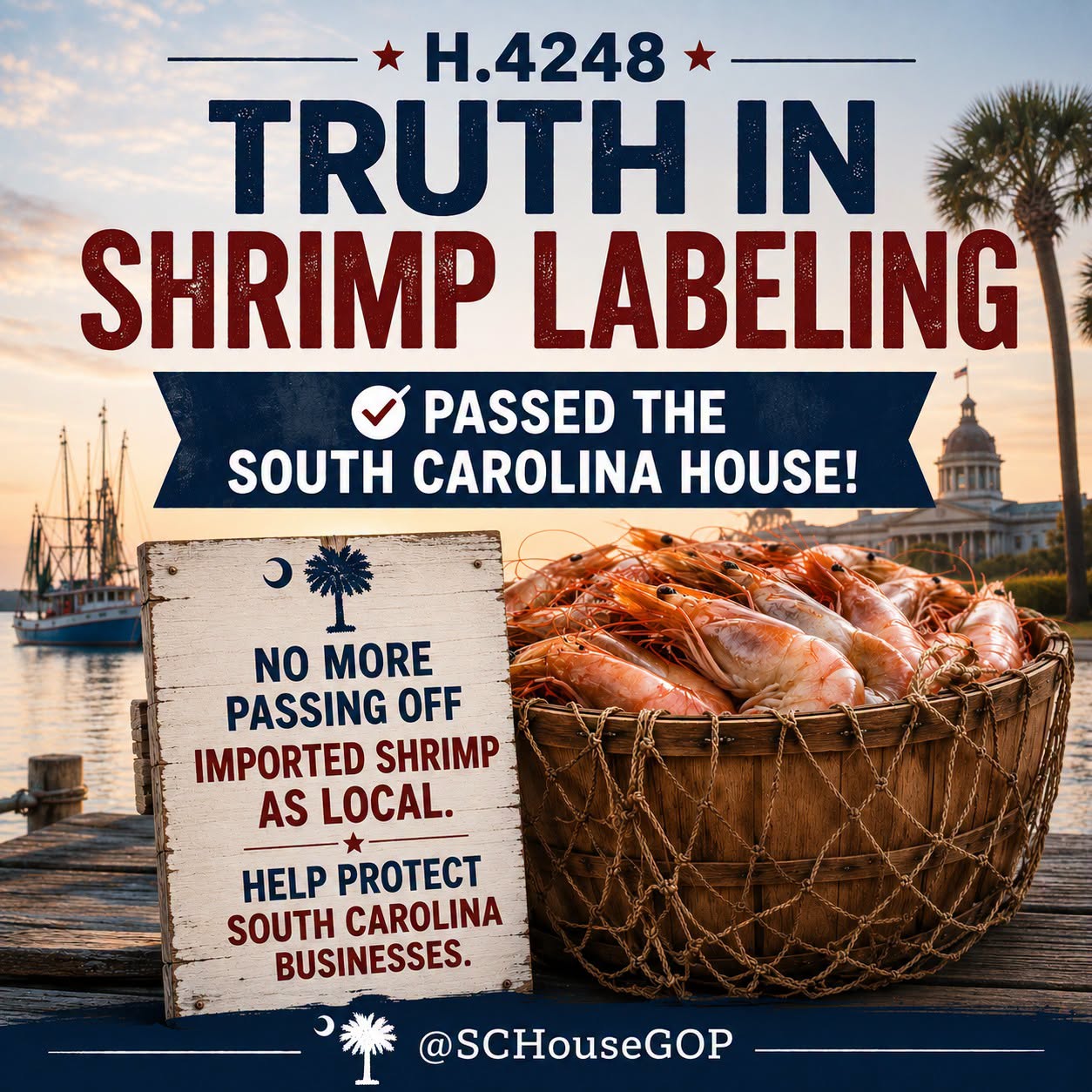
The South Carolina House of Representatives has adopted the Conference Committee Report for H.4248, the Truth in Shrimp Labeling Act, sending the measure to Gov. Henry McMaster for his signature.
The legislation requires restaurants and food service establishments to disclose the country of origin of the shrimp they serve, a step supporters say will keep imported shrimp from being marketed as a local catch. Establishments that serve shrimp would have to tell customers whether it was harvested in domestic waters or brought in from overseas. They could meet the requirement with a note on the menu, a posted sign at the entrance, or both.
The House took up the labeling proposal for a third time before clearing it on June 25. It passed the chamber without a dissenting vote, and the Senate approved it 33 to 5. Should the governor sign the bill, the requirements would take effect 120 days later.
The measure reaches a broad range of businesses, covering restaurants, cafeterias, food stands, and food trucks, along with any operation that sells prepared food directly to the public.
Rep. Shannon Erickson, R-Beaufort, pressed her colleagues to back the bill before the vote, framing it as a way to make sure South Carolina shrimp is identified as local once it lands on a menu.
The legislation grew out of the controversy known as “Shrimpgate,” in which testing by a consulting firm found that much of the shrimp served at Lowcountry restaurants was imported and farm raised rather than caught off the South Carolina coast. The findings renewed momentum for a labeling law after an earlier lawsuit against restaurants was thrown out.
Bryan Jones, a McClellanville shrimper who serves as vice president of the South Carolina Shrimpers Association, has welcomed the bill as an early step toward easing the pressures on a fleet that has been shrinking for years. He has said the change also lets diners decide for themselves whether they want domestic or imported shellfish.
Supporters describe the act as a commonsense measure that promotes transparency, protects consumers, and supports South Carolina’s shrimping industry and the coastal communities that depend on it.