Greenville County Stays in Severe Drought as Statewide Conditions Worsen
July 13, 2026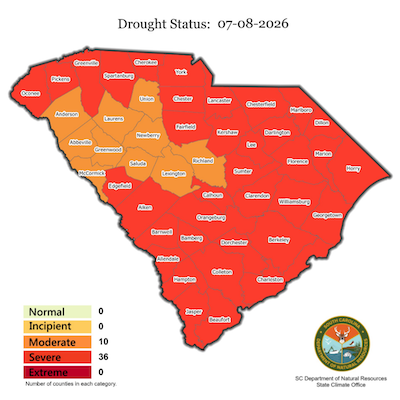
The South Carolina Drought Response Committee kept Greenville County at severe drought status during its July 8 meeting, as much of the state continues to battle worsening dry conditions and record heat.
Fountain Inn, Simpsonville and Mauldin sit within Greenville County, which remained at severe drought, the third-highest of four levels defined under the S.C. Drought Response Act. The committee, the state’s primary drought decision-making body, reviewed whether any county should be raised to extreme drought, the highest level, and determined that conditions had not reached that threshold anywhere in the state. Thirty-five counties are now at severe drought.
The committee upgraded Edgefield County from moderate to severe drought and kept all other severe-drought counties, including Greenville, at that level. Ten counties remained at moderate drought: Abbeville, Anderson, Greenwood, Laurens, Lexington, McCormick, Newberry, Richland, Saluda and Union.
No location in South Carolina has reached extreme drought since February 2009. Officials warned, however, that parts of the state could hit that mark this summer if the pattern of below-normal rainfall and extreme heat holds.
Statewide rainfall has fallen below normal in eight of the past 10 months. Since Jan. 1, rainfall deficits have topped 12 inches in some areas. The only months with normal to above-normal rainfall since August 2025 were October 2025 and May 2026.
Summer rain has been highly variable, officials said, with isolated thunderstorms dropping heavy rain in some spots while leaving nearby areas dry. In Horry County, precipitation since June 1 ranged by as much as 10 inches between monitoring stations.
The S.C. Department of Agriculture reported that spotty rainfall has kept some crops at status quo, but dryland and irrigated acreage across the state remain well behind. Forage and hay are lagging, and some livestock producers reported hay yields at just 30% of normal, forcing them to tap winter feed supplies months ahead of schedule.
Streamflow and groundwater remain below normal to well below normal across the state, according to the S.C. Department of Environmental Services. Some private wells are going dry, including 18 to 20 in Hampton County over the past week. As of July 2, 15 water systems had put mandatory water restrictions in place, and 40 were requesting voluntary conservation.
State agencies urged residents and water suppliers to conserve now, noting that early voluntary conservation can help delay or prevent tougher mandatory restrictions later in the summer. By cutting non-essential use early, officials said, communities lower overall demand and preserve storage.
The S.C. Forestry Commission also cautioned against outdoor burning, warning that dry soils and vegetation, particularly in the Coastal and Pee Dee regions, make wildfires easier to start and harder to control. Residents were urged to follow all burning regulations, monitor local weather and report wildfires immediately by calling 911.
The Drought Response Committee will meet again Aug. 6. More information about the committee and the state drought program is available at scdrought.com.
Cover photo: SCDNR