








A Close Call Next Door: What the Move Over Law Means for Laurens County Drivers
July 15, 2026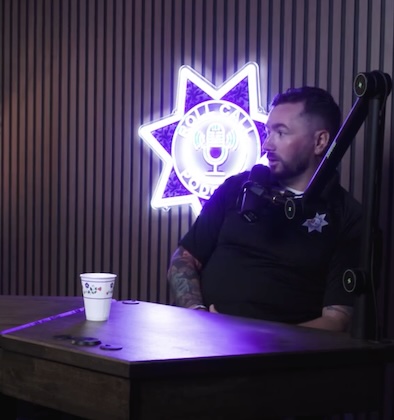
A Greenville County deputy came within a half second of losing his life on Interstate 85 earlier this month, and Laurens County law enforcement leaders say the driving that nearly killed him happens here, too.
In the early morning hours of July 3, Deputy Theo King was on I-85 South protecting a tow operator loading a disabled vehicle onto a rollback. His cruiser sat on the shoulder with its emergency lights flashing when another vehicle slammed into the back of it. King described on the Greenville County Sheriff’s Office Roll Call podcast how an instinct told him to look up. In less than half a second he saw headlights in his rear view mirror, felt the impact and found himself facing the side of the tow truck. The crash pinned his door shut, and he had to kick it open to reach the tow operator. Everyone involved was hospitalized. King is expected to make a full recovery.
What Laurens County Officers Say
Asked about recent incidents locally, law enforcement leaders said they could not recall one.
What they described instead was a steady pattern of drivers ignoring the law.
Clinton Police Chief Michael Addison said his department has not worked any recent incidents, but officers have been enforcing the law against drivers who fail to slow down and move over. Laurens Police Chief Heath Copeland reported much the same, saying his officers have written tickets for the violation as well. Laurens County Sheriff Don Reynolds said his deputies do not work traffic accidents on the interstate often, but the danger remains a concern, and he urged drivers to use caution any time they approach an emergency vehicle with its lights flashing.
The absence of a local tragedy, in other words, is not proof that drivers here are obeying the law.
What the Law Requires, and What It Costs
South Carolina’s Move Over Law, first passed by the General Assembly in 1996, requires drivers approaching a stopped emergency vehicle with flashing lights to move over into a lane away from it when it is safe to do so. Only when changing lanes is not possible may drivers simply slow down and pass with caution. The law covers ambulances and police, fire, rescue, recovery and towing vehicles.
King said many drivers wrongly assume easing off to the posted limit is enough. He recommends slowing to 20 miles per hour under the limit, and to 15 under on two-lane roads. A violation is a misdemeanor carrying a fine of $300 to $500, and drivers can be arrested. King said it ranks among the most expensive tickets a driver can receive, costing more than speeding 25 or more miles per hour over the limit.
The danger is not theoretical. In just over a month in 2025, three South Carolina Highway Patrol troopers were struck on the roadside with their blue lights flashing. One, Trooper First Class Dennis Ricks, was killed. A five-day state enforcement campaign that followed produced nearly 2,400 citations, roughly 350 drivers a day.
The message from King and from the officers who patrol Laurens County roads is simple. When drivers see flashing lights ahead, slow down, check the mirrors and move over when it is safe. It costs nothing and takes a moment, and it can mean the difference between an ordinary shift and a life lost.
Listeners can watch the full episode on the Roll Call by clicking HERE.