125 Years of Simpsonville: How the Golden Strip Transformed from Farm Country to Upstate Hub
July 20, 2026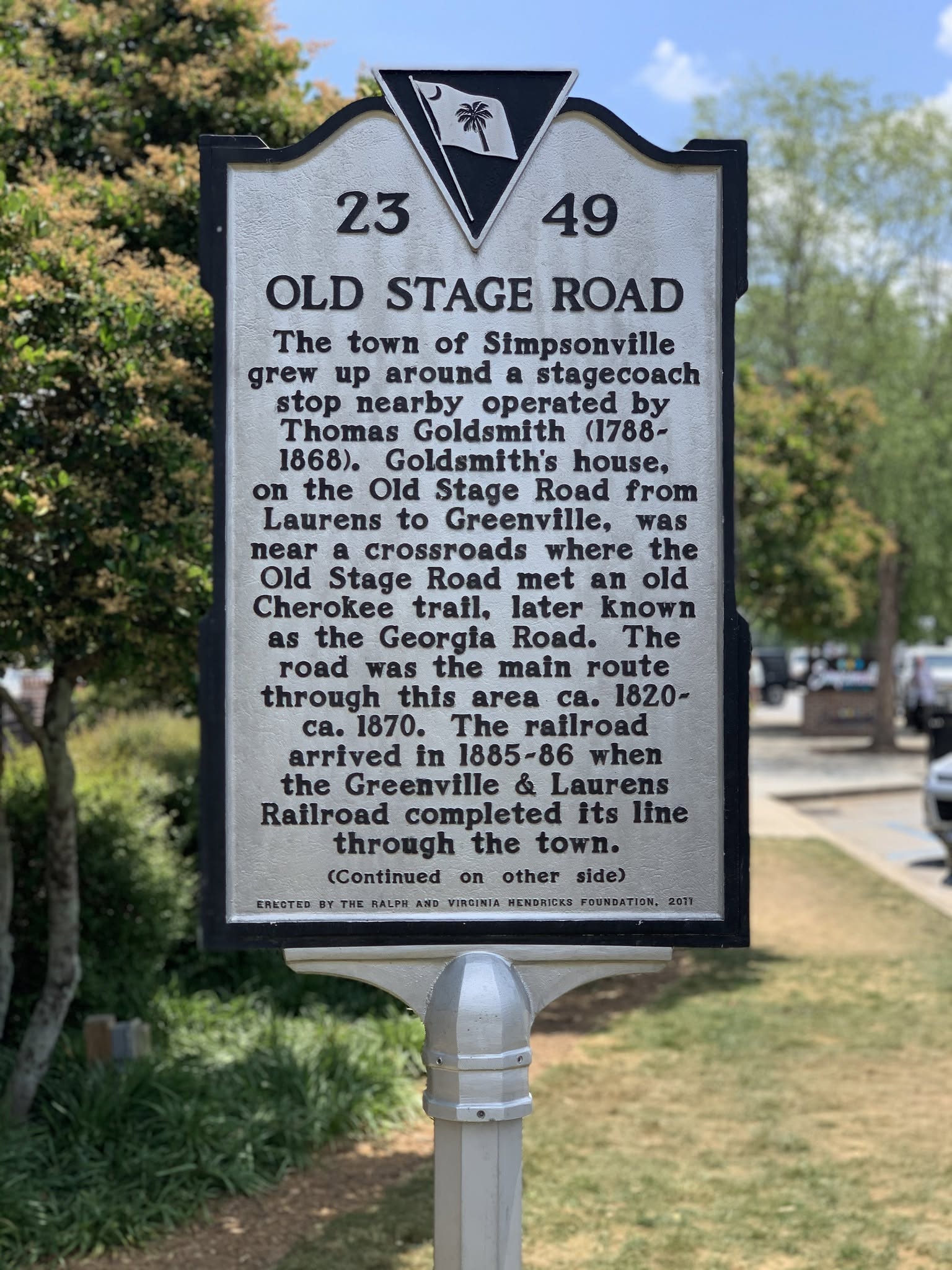
Long before food halls, amphitheaters, and sprawling suburban neighborhoods lined Highway 276, the town of Simpsonville was little more than a dusty dirt crossroads.
Today, as the city celebrates its 125th anniversary with community milestones like SPARK FEST and a dedicated local art and history exhibit at the Simpsonville Arts Center, it’s worth taking a look back at how a quiet 19th-century stagecoach stop evolved into one of the fastest-growing commercial and cultural hubs in the Upstate.
From “Plain” Crossroads to Railroad Boomtown
The area’s history dates back to the 1820s and 1830s, when the Old Stage Road crossed a well-traveled Cherokee trail. Early travelers knew the area simply as “Plain” or “Dry Ridge.”
The town got its permanent identity in 1838 when Peter Simpson, an enterprising farmer and blacksmith from Laurens County, set up his forge right at the crossroads. As his blacksmith shop thrived, he became the local postmaster, and locals began referring to the surrounding community as “Simpsonville.”
1838                    1885                    1901                    1953
Peter Simpson           Railroad Arrives        Official                Greenville Water
Opens Blacksmith        C&WC tracks fuel        Incorporation           Main Sparks "Golden
Shop at Crossroads      cotton industry         & Mill Boom             Strip" Expansion
The arrival of the Greenville and Laurens Railroad in 1885 transformed the agricultural settlement into a busy cotton-processing center. By the time the city was officially incorporated on August 13, 1901, Simpsonville was well on its way to becoming an industrial powerhouse. The opening of the Simpsonville Cotton Mill in the early 1900s cemented textiles as the backbone of the local economy for decades.
The Birth of the “Golden Strip”
For much of the early 20th century, Simpsonville remained a self-contained mill town separated from neighboring Mauldin and Fountain Inn by miles of farmland.
That changed dramatically in 1953, when the Greenville Water Works extended a major water trunk line south along U.S. Highway 276, connecting Mauldin, Simpsonville, and Fountain Inn.
With water access secured and Highway 276 widened, manufacturing plants, technology firms, and commercial developments flooded into southern Greenville County. Local news outlets and business leaders dubbed the booming corridor the “Golden Strip”—a moniker that remains a point of regional pride today.
Preserving Small-Town Charm Amid Modern Growth
Over the last thirty years, Simpsonville’s population has surged, yet the city has carefully balanced modern commercial development with historic preservation.
Downtown landmarks tell the story of that transformation:
-
The Clock Tower: Built on Main Street in 1986, the brick tower stands as the town’s iconic central landmark.
-
The Train Depot to Ice Cream Station: The former Seaboard Air Line Railroad passenger depot built in 1960 now serves as a beloved local ice cream shop.
-
Vaughn’s Food Hall: A historic feed-and-seed store operating for nearly a century was reimagined into a vibrant outdoor food hall and community gathering space.
-
CCNB Amphitheatre at Heritage Park: Holding up to 15,000 spectators, the outdoor venue has earned Simpsonville its reputation as the “Stage of the Upstate,” hosting national touring acts alongside local events.
Honoring the Legacy: As part of SPARK FEST, residents can explore the 125th Anniversary Art & History Exhibit at the Simpsonville Arts Center. Local submissions open through August 1 feature paintings, sculptures, and historic photos showcasing the people, places, and landmarks that shaped the town.
From Peter Simpson’s single anvil to a thriving city of more than 25,000 residents, Simpsonville’s story is a testament to community resilience and vision. As the city celebrates 125 years of history, it stands ready for the next century while keeping its small-town heart firmly intact.