








James Smith to talk about Patriots Point, and about his grandfather’s heroism – Aug. 7
July 22, 2026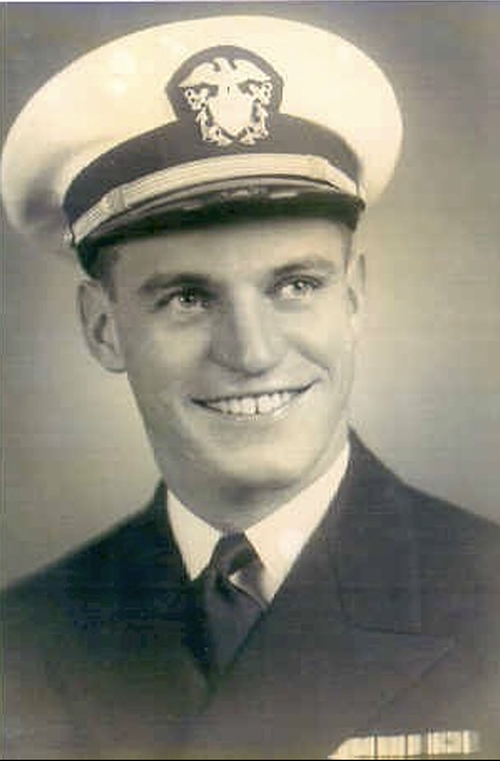
On 16 April 1945, during the Battle of Okinawa, USS Laffey – a Sumner-class destroyer – was attacked by a record total of 22 kamikazes. She shot down nine of them. Six of the suicidal Japanese pilots manage to crash their planes into Laffey, killing 32 American sailors and wounding 71. Still, she fought on, and was known from that day as The Ship That Would Not Die.
She is still afloat. She is moored today, along with USS Yorktown, at Patriots Point Naval & Maritime Museum in Charleston Harbor. You can go aboard any day you like, from 10 a.m. to 5 p.m.
You can learn more about the Laffey and Patriots Point at noon on Friday, Aug. 7, at the South Carolina Confederate Relic Room and Military Museum in Columbia. Former Rep. James Smith will deliver a free lecture as part of the museum’s regular Noon Debrief series. He is uniquely qualified on both subjects. He is a member of the Patriots Point board, and the grandson of a naval officer who played a critical role in fighting off those kamikazes that day in 1945.
Lt. Paul B. Smith was a plankowner on the Laffey, having been aboard since she was commissioned early in 1944. He was a member of a very special class at the Naval Academy, the Class of ’42, which graduated together a semester early, right after Pearl Harbor.
By the Battle of Okinawa, Lt. Smith was the gunnery officer, and in direct command of the guns that shot down all those kamikazes. The Laffey already had plenty of combat experience before that day, having been involved in the D-Day landings off Utah Beach, as well as the landings in the Philippines and Iwo Jima. But Okinawa was where she would cement her reputation.
It was also where Lt. Smith, having reacted with coolness at the very center of the nightmare, earned the Silver Star. His citation stated:
Lieutenant Smith performed his duties courageously and with sound judgment by splitting up the main battery when necessary in order that as many attacking planes as possible could be taken under fire. He was constantly alert and quick to spot and take under fire the most dangerous targets. His continuous vigilance… saved his ship from probable destruction. His conduct was in keeping with the highest traditions of the United States Naval Service.
The lieutenant would go on to become Captain Smith by the time he retired. He passed away in 2004.
His grandson, who will speak at the Relic Room, has also had a distinguished military career. After 9/11, the attorney and lawmaker resigned his commission as a JAG officer in the National Guard to enlist in the infantry. In his late 30s, he went through basic training with recruits less than half his age, went on to advanced training, regained his commission, and led troops in combat in Afghanistan. For all that, he is honored in the Guard’s Hall of Fame. He is now a lieutenant colonel. The uniform he wore in Afghanistan is on display in the Relic Room.
In 2018, he was the Democratic nominee for governor of South Carolina. Today, he practices law and pursues such passionate interests as Patriots Point, which is celebrating its 50th anniversary this year. He is also a member of the Laffey Association. Three times a year, he and other members, mostly veteran sailors, live aboard the Laffey for days and “do serious work” to keep her shipshape. “It’s a privilege to be a part of that group,” he says, “among all those real tin-can sailors.”
About the South Carolina Confederate Relic Room and Military Museum
Founded in 1896, the South Carolina Confederate Relic Room and Military Museum is an accredited museum focusing on South Carolina’s distinguished martial tradition through the Revolutionary War, Mexican War, Civil War, Spanish-American War, World Wars I and II, Vietnam, the War on Terror, and other American conflicts. It serves as the state’s military history museum by collecting, preserving, and exhibiting South Carolina’s military heritage from the colonial era to the present, and by providing superior educational experiences and programming. It recently opened a major new exhibit, “A War With No Front Lines: South Carolina and the Vietnam War, 1965-1973.” The museum is located at 301 Gervais St. in Columbia, sharing the Columbia Mills building with the State Museum. For more information, go to https://crr.sc.gov/.