









Why yellow jackets get meaner in August
August 2, 2026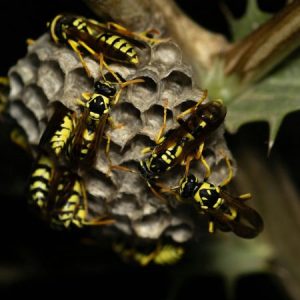
Late summer brings the year’s highest risk of yellow jacket stings, and the reason comes down to the insect’s life cycle.
Every nest begins in spring with a single queen. She finds a cavity, often an abandoned rodent burrow underground, and raises her first workers alone. Once those workers mature, the colony grows fast through the summer months. By August a mature underground nest can reach the size of a basketball and hold several thousand workers.
That growth is why a nest nobody noticed in May can suddenly become a hazard in August. Most nests in the Upstate are underground, with an entrance no larger than a quarter, though yellow jackets also nest in wall voids, crawl spaces, attics and utility boxes. Mowing, string trimming, raking and moving firewood account for many late summer stinging incidents, because vibration alone can trigger a defensive swarm.
Behavior changes this time of year as well. The colony stops producing workers and begins raising new queens and males instead. As brood production ends, foragers lose their usual food source and turn to sugars, which is why yellow jackets crowd around soft drinks, fruit, garbage cans and cookouts in late summer and fall. They also become bolder and more persistent as the colony declines.
Cold weather ends the cycle. Hard freezes kill the workers and the old queen, and the nest is not reused. Only newly mated queens survive the winter to start nests the following spring.
Homeowners are encouraged to scout a yard before mowing, watching for steady insect traffic in and out of a single spot on the ground or along a foundation. Any nest found should be marked and avoided.
If treatment is needed, it should be done after dark using an aerosol product labeled for yellow jackets, applied from the farthest distance the can allows. A flashlight should not be aimed directly at the opening. Gasoline and other fuels should never be poured into a nest.
Nests inside walls, nests near playgrounds, ball fields or doorways, and any nest on a property where someone has a known sting allergy should be turned over to a licensed pest control professional.
Anyone stung should leave the area quickly rather than swatting, which draws more workers. Wash the site with soap and water and apply a cold compress. Emergency care is needed for signs of a severe reaction, including spreading hives, swelling of the face or throat, difficulty breathing, dizziness or confusion. Those symptoms warrant a call to 911.
Simple precautions cut down on encounters at outdoor events. Keep food and drinks covered, use cups with lids rather than open cans, keep trash containers closed, clear fallen fruit from under trees and wear shoes in the yard.
Nests in remote corners of a property that pose no threat can be left alone. Yellow jackets consume large numbers of caterpillars, flies and other pest insects, and the colony will die out on its own once cold weather arrives.