









Armadillos in the Yard: Invasive Diggers Make Their Way Through Laurens County
June 17, 2026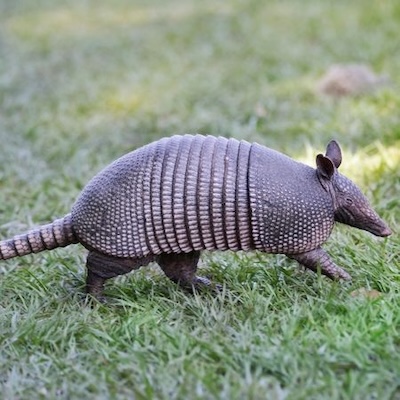
Many Laurens County residents have already met their newest unwelcome neighbor, even if they have never laid eyes on it. The sign usually appears overnight: shallow holes scattered across the lawn, flower beds flipped over and tree roots left exposed. The digger behind the mess is the nine-banded armadillo, an invasive species that has steadily worked its way into the Upstate and shows little sign of turning back.
The animals are native to Central and South America and have been pushing their range northward for well over a century. They first turned up in Texas in the mid-1800s and have spread across the South ever since, now reaching from Kansas in the west to the Carolinas in the east. South Carolina is firmly within their territory, and reports continue to climb across the state.
What Laurens County is seeing mirrors the experience of neighbors in nearby Newberry County. In Prosperity, police have fielded steady calls from residents reporting torn-up yards, with officers sometimes helping homeowners trap the animals or pointing them to the South Carolina Department of Natural Resources. Many residents say they never spot the armadillo itself and only realize what happened when they walk outside the next morning to find fresh holes.
The damage is the chief complaint. According to SCDNR and Clemson Cooperative Extension’s Home and Garden Information Center, armadillos dig almost constantly while hunting for insects, grubs and worms. That habit can leave a lawn pocked with holes, pull up garden plants and create burrows beneath homes. Over time, the tunneling can also reach buried cables, pipes and even a home’s foundation.
Armadillos are mostly active at night. They have poor eyesight but a sharp sense of smell, which helps explain why so many residents never see the animal at work. They are generally shy and pose little threat to people. Health officials note that armadillos can carry bacteria linked to leprosy, though the CDC rates the risk of human transmission as low. SCDNR adds that the animals can also carry a parasite associated with Chagas disease. The standard advice from wildlife officials is to avoid handling them barehanded and to wear gloves around any wild animal.
For homeowners hoping to defend their yards, Clemson Extension and wildlife experts suggest a few approaches. A solid fence buried about a foot deep can keep the animals out, since they are not strong climbers or jumpers. Treating a lawn to cut down on insects removes the food that draws them in, and spicy deterrents such as cayenne pepper may help discourage digging. Experts caution that no repellent has proven reliably effective.
State law gives property owners some flexibility. Clemson Extension notes there is no closed season on armadillos on private land, though a valid hunting license is still required, and animals causing damage may be shot where it is legal to fire a weapon. One rule stands out, however. State officials say a trapped armadillo cannot legally be relocated in South Carolina. It must be put down on-site by the homeowner or a licensed professional.
For now, many Laurens County residents are following the lead of their Newberry neighbors, filling in the holes and keeping watch for the little armored visitors that have quietly settled into the Upstate.