Celebrating 60 of South Carolina’s most influential military leaders
November 2, 2025
Maj. Gen. Charles Bolden, Brig. Gen. Francis Marion, and Maj. Gen. James E. Livingston
By MidlandsBiz
South Carolina is a military state: Home to Fort Jackson, the largest U.S. Army basic training facility in the nation; Parris Island, one of only two Marine Corps Recruit Depots in the entire nation; Shaw Air Force Base, home of the USAF’s famed 20th Fighter Wing; and so much more. Some 386,000 military veterans (or about 7.1 percent of the state’s population) call S.C. home. Many decisive battles of the American Revolution were fought here, and the American Civil War literally began here.
So this VETERANS MONTH (Veterans Day being Nov. 11, and the Marine Corps’ 250th birthday being Nov. 10) we decided to celebrate with a listing of 60 of the most influential or impactful military leaders either from S.C. or with deep S.C. roots or who are otherwise connected to the Palmetto State.
This list is not meant to be exhaustive, and we are sure there will be glaring omissions. In that, we welcome your suggestions for next year.
Nearly all of our state’s Medal of Honor recipients are listed as are those who are inductees in the S.C. Military Veterans Hall of Fame (all Medal of Honor recipients are Hall of Fame inductees as well), general-officers, admirals, a few key commanding officers, historically significant military leaders, famous firsts, and those who have had a major impact on the state and nation through their military service and post-service work and civilian leadership. The list is not alphabetical. It is neither organized by rank, nor does it follow any chronological pattern. All have achieved greatness militarily speaking and post-military, and all for various reasons have had a marked impact on the Palmetto State.
Base and post commanders, though certainly influential, regularly transfer in-and-out, so they are not included in this present list.
The list begins with retired U.S. Marine Maj. Gen. James E. Livingston, Medal of Honor recipient. Maj. Gen. James E. Livingston, widely held to be the “Grand old man of the Medal of Honor Society,” served on active duty in the Marine Corps for over 33 years, and he was awarded the nation’s highest decoration for combat valor for his actions during the Battle of Dai Do, Vietnam, 1968.
Next is Maj. Gen. Charles Bolden, also a retired Marine two-star. Gen. Bolden became a Space Shuttle astronaut and ultimately the senior administrator (director) of the National Aeronautics and Space Administration (NASA).
For the sake of space and conciseness (going forward) our list of 60 influential (or impactful) military leaders will simply list Medal of Honor recipients as the “honorees” for what they are. After all, the Medal of Honor is the nation’s preeminent military decoration. It defines the listed military leader, and it is sufficient in its description of said leader.
Corporal Kyle Carpenter, U.S. Marine Corps (Ret.), Medal of Honor recipient.
– U.S. Marine Corps photo by Cpl. Michael C. Guinto
Sergeant Major Thomas Payne, U.S. Army, Medal of Honor recipient.
Maj. Gen. Todd B. McCaffrey, U.S. Army (Ret.), the current secretary of the S.C. Department of Veterans Affairs.
General Glenn M. Walters, U.S. Marine Corps (Ret.), president of THE CITADEL, the Military College of South Carolina.
Col. Kevin Shwedo, U.S. Army Infantry (Ret.), Col. Shwedo is the Civilian Aide Emeritus to the Secretary of the Army (for S.C.) and the current director of the S.C. Department of Motor Vehicles. He is also a S.C. Military Veterans Hall of Fame inductee.
Brig. Gen. Darlene Marie Goff, S.C. Army National Guard (Ret.), the first female brigadier general in the S.C. Army National Guard and an accomplished post-military global travel writer.
Maj. Gen. Robin B. Stilwell, S.C. Army National Guard, and the current adjutant general of South Carolina. As such, Maj. Gen. Stilwell is the ranking S.C. National Guard commander, commanding all elements of the S.C. Military Department. In his capacity as a civilian legal professional, Stilwell is a circuit court Judge for the State of South Carolina.
Maj. Gen. Jeff Jones, S.C. Army National Guard. Maj. Gen. Jones is the deputy adjutant general of South Carolina. As the number-two man leading the S.C. Military Department – including the Army National Guard, Air National Guard, the S.C. State Guard, and the Emergency Management Division – Maj. Gen. Jones also serves as the Deputy Joint Force Land Component Commander during defense support to civilian authorities missions.
Maj. Gen. Will Grimsley, U.S. Army (Ret.) chairman of the South Carolina Military Affairs Advisory Council (formerly the South Carolina Military Base Task Force). Gen. Grimsley previously served as secretary of the S.C. Department of Veterans Affairs. He is also a S.C. Military Veterans Hall of Fame inductee.
1st Lieutenant Clebe McClary, U.S. Marine Corps (Ret.). Lt. McClary is a decorated Marine Reconnaissance officer, an author, and an acclaimed public speaker.
Col. Bill Connor, U.S. Army Infantry (Ret.). Col. Connor served as the senior U.S. military advisor during his deployment to Helmand Province, Afghanistan. Elected by The Citadel’s alumni to the prestigious board of visitors, Col. Connor is also an attorney and a NEWSMAX defense-national security analyst.
Lt. Col. William Barret Travis, Texian Army, commanding officer of the ill-fated Alamo mission (outpost) during the Texas Revolution. Lt. Col. Travis was a native of Saluda, S.C. His letter requesting reinforcements for his beleaguered force concluded with: “I am determined to sustain myself as long as possible and die like a soldier who never forgets what is due to his own honor and that of his country. Victory or Death.”
1st Lt. William G. “Billy” Farrow, U.S. Army Air Forces. Lt. Farrow was a USAAF B-25 pilot and one of the famed Doolittle Raiders during World War II. Following the raid, Lt. Farrow was captured by the Japanese and executed. Though a native of Darlington, S.C., Farrow Road in Columbia is Lt. Farrow’s namesake.
Lt. Gen. James C. Dozier, U.S. Army. Lt. Gen. Dozier was a Medal of Honor recipient.
Maj. Gen. Strom Thurmond, U.S. Army (Ret.). Future Senator Thurmond served during World War II as an Airborne (gliderborne) officer fighting at Normandy. Thurmond was also a judge, a S.C. governor and later a United States senator.
Master Sergeant John Baker, U.S. Army (Ret.), Master Sergeant Baker was a Medal of Honor recipient.
Corporal Freddie Stowers, U.S. Army. Corporal Stowers was posthumously awarded the Medal of Honor for actions during World War I.
Captain T. Moffat Burriss, U.S. Army. Capt. Burriss was a U.S. Army paratrooper during World War II. He later became a member of the S. C. House of Representatives and an acclaimed author. During World War II, Burriss’s company was the lead company in the famous Waal River Crossing and the capture of the Nijmegen Bridge. Burriss’s part in the battle was the inspiration for several scenes in the movie, “A Bridge Too Far.”
Brig. Gen. Charles M. Duke Jr., U.S. Air Force (Ret.). Brig. Gen. Duke is a former fighter pilot, a test pilot, and an Apollo astronaut.
General William C. Westmoreland, U.S. Army (Ret.), Gen. Westmoreland was commanding general of all U.S. and allied forces in the Vietnam War. He later became the U.S. Army chief of staff.
Sergeant William Jasper, Continental Army. Sergeant Jasper heroically raised the S.C. flag atop the parapet of Fort Sullivan (future Fort Moultrie) during the 1776 Battle of Sullivan’s Island, S.C. In 1779, he was mortally wounded during the Siege of Savannah, Georgia.
Master Sergeant Jay Alverson, U.S. Air Force (Ret.). Master Sergeant Alverson served in the U.S. Marine Corps prior his service in the U.S. Air Force. He is the former chair of the University of South Carolina Veterans Alumni council and the current executive director of the S.C. Military Veterans Hall of Fame (and an inductee).
Lt. Col. James E. Smith Jr., S.C. Army National Guard and former U.S. Army Reserve (Infantry). Lt. Col. Smith served in Afghanistan. He is an attorney and a former member of the S.C. House of Representatives. He is also a S.C. Military Veterans Hall of Fame inductee.
Brig. Gen. Peter Horry, S.C. Militia and Continental Army. Brig. Gen. Horry fought throughout the American Revolution and later served in the S.C. House of Representatives.
Captain Thomas Woodward, S.C. Militia (Rangers). Capt. Woodward (aka “the Regulator”) fought as a mounted Ranger commander throughout the French and Indian War and later during the American Revolution. He was killed in action while pursuing a band of Loyalist cavalry in 1779.
Colonel W. Thomas Smith Jr., S.C. Military Department. Col. Smith is a formerly deployed U.S. Marine Infantry leader, war correspondent (Bosnia, West Bank, Iraq, Lebanon). Col. Smith is an author, a military analyst, and a New York Times bestselling editor. He is also a S.C. Military Veterans Hall of Fame inductee.
Chief Warrant Officer 4 Harold Edward “Speedy” Wilson, U.S. Marine Corps (Ret.). CW4 Wilson was a Medal of Honor recipient.
Colonel Steven B. Vitali, U.S. Marine Corps (Ret.). A decorated Marine officer, Col. Vitali commanded both U.S. and foreign forces in Iraq and Afghanistan. He is an inductee in the S.C. Black Belt Hall of Fame.
Colonel William P. Collier, Jr., U.S. Army (Ret.), Col. Collier was the artillery officer in command of the nearly overrun garrison at Mo Duc, Vietnam. Rallying his men against overwhelming odds, the defenders repelled wave-after-wave of NVA assaults: The battle masterfully chronicled in Collier’s book, “Outnumbered 20-1.” He was nominated years later for the Medal of Honor.
Lt. Col. Caroline Fermin, U.S. Marine Corps (Ret.). The director of Veterans Affairs for Beaufort County, S.C., Lt. Col. Fermin holds an undergraduate degree, three masters degrees and a doctorate in leadership and innovation from from St. Thomas University. She is a S.C. Military Veterans Hall of Fame inductee.
Command Sgt. Major (Ret.) Lamont Christian, U.S. Army (Ret.). CSM Christian is a former commandant of the U.S. Army Drill Sergeant Academy and a member of the Fort Jackson Hall of Fame. He is a S.C. Military Veterans Hall of Fame inductee.
Sergeant 1st Class (Ret.) Tim Frisby, U.S. Army. Sgt. 1st Class Frisby is an Airborne Ranger and former wide receiver for the South Carolina Gamecocks. He is a recipient of Disney’s Wide World of Sports Spirit Award for playing college football at the age of 39, and he is a S.C. Military Veterans Hall of Fame inductee.
Private First Class Furman L. Smith, U.S. Army. PFC Smith was a Medal of Honor recipient.
Private First Class Ralph H. Johnson, U.S. Marine Corps. PFC Johnson was a Medal of Honor recipient. The Ralph H. Johnson VA Medical Center in Charleston (formerly the Charleston VA Medical Center) was renamed in honor of PFC Johnson.
Private First Class William A. McWhorter, U.S. Army. PFC McWhorter was a Medal of Honor recipient.
Captain John James McGinty III, U.S. Marine Corps. Captain McGinty was a Medal of Honor recipient.
Maj. Gen. George L. Mabry Jr., U.S. Army (Ret.), Maj. Gen. Mabry was a Medal of Honor recipient.
Brig. Gen. Francis Marion, S.C. Militia. Perhaps the most-famous of the South Carolina guerrilla leaders, Brig. Gen. Marion’s nom de guerre was “the Swamp Fox (an adaptation of British dragoon commander Lt. Col. Banastre Tarleton’s referencing of Marion as “that damned old fox.”). He is a S.C. Military Veterans Hall of Fame inductee.
Brig. Gen. Thomas Sumter, S.C. Militia. In the same breath that he referred to Marion as that “damned old fox,” Lt. Col. Tarleton also christened his equally dangerous foe Sumter, “the Gamecock.” Brig. Gen. Sumter is a S.C. Military Veterans Hall of Fame inductee.
Maj. Gen. William Moultrie, S.C. Militia and Continental Army. As a colonel, Moultrie commanded the Sullivan’s Island defenses in Charleston, S.C. during the American Revolution. The island fortress (aka Fort Sullivan) was later renamed Fort Moultrie in Moultrie’s honor. After the war Maj. Gen. Moultrie became lieutenant governor, later governor of South Carolina. He is a S.C. Military Veterans Hall of Fame inductee.
Maj. Gen. Leon Lott, S.C. State Guard (commanding general of state defense force militia). Maj. Gen. Lott is sheriff of Richland County, S.C. and he was the National Sheriff’s Association National Sheriff of the Year in 2021. Maj. Gen. Lott serves as president of the Fort-Jackson Palmetto State Chapter of the Association of the U.S. Army. He is a member of the Fort Jackson Hall of Fame, and he is a S.C. Military Veterans Hall of Fame inductee.
Maj. Gen. Tom Mullikin, S.C. State Guard (Ret. commanding general of state defense force militia). Maj. Gen. Mullikin is a former U.S. Army officer, an attorney, and the current director of the S.C. Department of Natural Resources. Maj. Gen. Mullikin is the founding chair of the S.C. Floodwater Commission and a recent recipient of the S.C. Supreme Court Chief Justice’s Lifetime Achievement Award.
Maj. Gen. Stanhope S. Spears Sr., S.C. Army National Guard (Ret.). The 26th adjutant general of S.C., Maj. Gen. Spears was a former Gamecock quarterback (1955-1959) who later oversaw and directed the S.C. Military Department – including the S.C. Army and Air National Guard – through the post-911 high-tempo deployment phase for National Guard units.
Colonel Elliott White Springs, U.S. Army Air Service. Col. Springs served in both Britain’s Royal Flying Corps and the U.S. Army Air Service during World War I. He became an “ace” shooting down 16 enemy aircraft during the war. He later served in the U.S. Army Air Corps, and ultimately became a successful author and businessman.
General Jacob Edward Smart, U.S. Air Force (Ret.), Gen. Smart served in the U.S. Army Air Corps, the U.S. Army Air Forces, and the U.S. Air Force in peace and in war. He later served as an administrator with NASA, working on the Hubble Telescope project.
Rear Admiral James Henry Flately III, U.S. Navy (Ret.). The son of Vice Admiral James H. Flately, the younger Adm. Flately is a former fighter pilot, test pilot, and a S.C. Aviation Hall of Fame inductee.
General Mark Clark, U.S. Army Infantry (Ret.). Gen. Clark served in World War I, World War II, and the Korean War. He later became president of The Citadel, the Military College of South Carolina. The Mark Clark Expressway in Charleston is named in Gen. Clark’s honor as is Mark Clark Hall at The Citadel.
Lieutenant Michael E. Thornton, U.S. Navy SEALs (Ret.), is a Medal of Honor recipient. Thornton coined the phrase: “The only easy day was yesterday.”
Chief Boatswains Mate (Honorary) James Elliott Williams, U.S. Navy, was a Medal of Honor recipient.
Lance Corporal James Donnie Howe, U.S. Marine Corps, was a Medal of Honor recipient.
Sergeant Richmond Hobson Hilton, U.S. Army, was a Medal of Honor recipient.
Corporal James Davison Heriot, U.S. Army, was a Medal of Honor recipient.
Corporal Thomas E. Atkins, U.S. Army, was a Medal of Honor recipient.
Corporal John Cantey Villepigue, U.S. Army, was a Medal of Honor recipient.
Corporal Donald Leroy Truesdell, U.S. Army, was a Medal of Honor recipient.
Noah Odell Knight, U.S. Army, was a Medal of Honor recipient.
Maj. Gen. Andrew Jackson, U.S. Army (also S.C. Militia and Tennessee Militia). Maj. Gen. Jackson was the hero of the Battle of New Orleans in 1814, who became the 7th president of the United States. Fort Jackson, S.C. is named in his honor.
Maj. Gen. Johann Baron DeKalb, Continental Army. Though foreign born, Maj. Gen. DeKalb will forever be a “son of South Carolina.” Brave to the last, Maj. Gen. DeKalb lost his life in the ill-fated Battle of Camden, S.C. in 1780. As he lay mortally wounded – shot through three times and with multiple bayonet wounds – British General Sir Charles Cornwallis rode up to him and said: “I am sorry, sir, to see you [like this]. I’m not sorry that you are vanquished, but I am sorry to see you so badly wounded.” Cornwallis then had his own surgeons attend to the dying DeKalb who is today interred in Camden.
As mentioned, this is not meant to be a complete listing. But it is “60” of some of S.C.’s most influential (impactful) military leaders. If we were to expand that number, we would have to include South Carolina’s four signers of the Declaration of Independence, all of whom were soldiers in the S.C. Militia with one who also served in the Continental Army.
In honor of Veterans Month, the editors and staff of MidlandsBiz, UpstateBizSC, and LowcountryBizSC extend our heartfelt gratitude to all who have served.









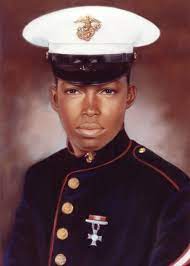 Private First Class Ralph H. Johnson, U.S. Marine Corps. PFC Johnson was a Medal of Honor recipient. The Ralph H. Johnson VA Medical Center in Charleston (formerly the Charleston VA Medical Center) was renamed in honor of PFC Johnson.


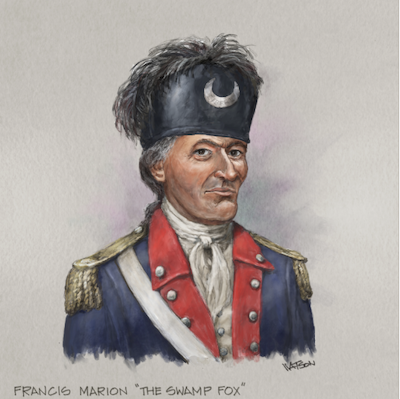 Brig. Gen. Francis Marion, S.C. Militia. Perhaps the most-famous of the South Carolina guerrilla leaders, Brig. Gen. Marion’s nom de guerre was “the Swamp Fox (an adaptation of British dragoon commander Lt. Col. Banastre Tarleton’s referencing of Marion as “that damned old fox.”). He is a S.C. Military Veterans Hall of Fame inductee.


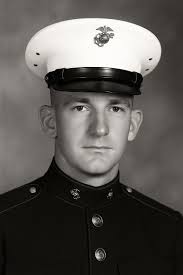 Lance Corporal James Donnie Howe, U.S. Marine Corps, was a Medal of Honor recipient.

 Corporal Thomas E. Atkins, U.S. Army, was a Medal of Honor recipient.