Clearer Horizons: Upstate Recovers from Late-April Haze
April 27, 2026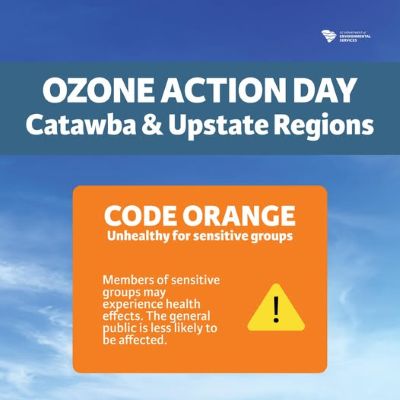
After a weekend of smoky horizons and health advisories, residents in the Golden Strip are finally breathing easier. The Code Orange Air Quality Alert that gripped the region has expired as a shift in weather patterns successfully pushed wildfire smoke and ozone out of the Upstate.
The haze, which was most intense over the weekend, left a visible shroud over major landmarks and sparked a flurry of health warnings from state officials.
The Smoke Source
The primary culprit for the deteriorating air quality was a series of massive wildfires in southern Georgia. Southerly winds acted as a conveyor belt, carrying fine particulate matter hundreds of miles north into South Carolina.
For several days, a high-pressure system acted like a lid over the region, trapping that smoke and local pollutants near the ground. This stagnation created a “chemical kitchen” effect, where heat and sunlight combined with the trapped smoke to spike ground-level ozone to unhealthy levels.
A Weekend Under Alert
During the peak of the alert, the South Carolina Department of Environmental Services (SCDES) designated the air as Code Orange, or “Unhealthy for Sensitive Groups.” Many local residents, particularly those with asthma or respiratory conditions, reported staying indoors and keeping windows sealed to avoid the heavy scent of woodsmoke that permeated the air in Mauldin and Simpsonville.
The Turning Point
The atmospheric relief arrived late Sunday night into early Monday morning. A cold front moved through the Palmetto State, shifting the winds to the north. These cleaner, crisper air masses effectively flushed the Georgia smoke out of the Golden Strip and broke the high-pressure “lid” that had been holding pollutants at ground level.
Current Conditions
As of Tuesday morning, air quality across Greenville County has returned to the “Good” category. Local meteorologists expect these clear conditions to persist for the next several days, with visibility returning to normal along the I-385 corridor.
While the immediate threat has passed, health officials continue to monitor seasonal wildfire activity to the south, noting that shifting spring winds can bring temporary changes to air quality with little notice.