State Officials Urge Vigilance as Invasive Yellow-Legged Hornet Threatens Upstate Ecosystem
April 27, 2026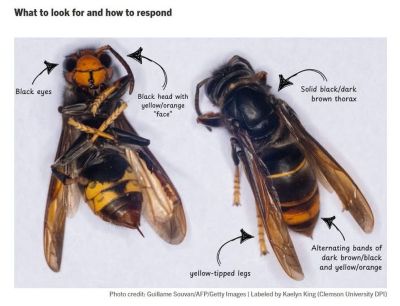
Clemson University officials and the South Carolina Department of Agriculture are calling on residents to help identify and report sightings of the invasive yellow-legged hornet (Vespa velutina). The warning comes as spring activity increases, raising concerns about the potential impact of this predatory species on the state’s vital honeybee populations and local agriculture.
While similar in appearance to some native species, the yellow-legged hornet is a highly aggressive predator of honeybees and can cause significant damage to the biodiversity of South Carolina’s gardens and farms if left unchecked.
How to Spot the Invader
The yellow-legged hornet can be distinguished from native hornets and wasps by several specific physical characteristics. Experts are asking the public to look for:
-
Distinctive Legs: The most defining feature is the color of their legs—the lower half (the tips) is a bright yellow, contrasting with the darker upper portion.
-
Color Pattern: They possess a solid black or very dark brown thorax (the middle section).
-
Abdominal Bands: The abdomen is mostly dark with alternating bands of yellow or orange toward the rear.
-
Head Coloring: They typically have a black head with a distinct yellow or orange face.
Why the Concern?
Unlike native predators, yellow-legged hornets often “hawk” honeybee hives—hovering outside the entrance to capture returning foragers. A small group of these hornets can decimate a healthy bee colony in a matter of hours.
“Our honeybees are already facing pressure from habitat loss and climate shifts,” says Marcus Miller, a regional agricultural specialist. “Introducing an efficient, invasive predator like the yellow-legged hornet could have a ripple effect on everything from commercial peach orchards to local backyard vegetable patches.”
How to Respond
Officials are urging the public not to approach or attempt to remove a suspected nest themselves. These hornets can be protective and have a painful sting. Instead, the recommended protocol is:
-
Observe from a distance: If it is safe to do so, take a clear photograph of the insect.
-
Note the location: Keep track of where the hornet was seen and what it was doing (e.g., feeding on a plant or flying toward a specific tree).
-
Report the sighting: Submit your photos and location details to the Clemson Department of Plant Industry (DPI) online portal.
Backyard Preparedness
For those currently working in their gardens or preparing for the summer harvest, experts suggest keeping a close eye on flowering plants where pollinators congregate. Early detection is considered the most effective tool in preventing the species from establishing a permanent foothold in the Upstate.