Timeless Georgetown: The Story of Thomas Lynch
April 15, 2026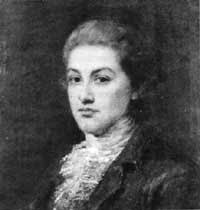
Welcome to a new series dedicated to the stories that shaped Georgetown, South Carolina—the third-oldest city in the state. From the strategic maneuvers of the Revolutionary War to the cultural evolution of the “Rice Coast,” this series explores the legends and landmarks that define our heritage. Join us as we look beyond the modern landscape to discover the people and events that paved the way for the Georgetown we know today.
By Mary Boyd
For such a small town in the early days of our country, Georgetown has a dignitary of rare credentials – a signer of the Declaration of Independence. His name was Thomas Lynch, Jr. He was actually the third generation to bear this name and technically should be Thomas Lynch, III. However, it was his father, Thomas, Sr., who attended the Continental Congress in Philadelphia and helped draft the declaration. He suffered a stroke and his son, Thomas, Jr., hurried from Georgetown to Philadelphia to attend to his father. Thomas Sr. was too ill to resume his seat.
Fortunately, Thomas, Jr., had the appropriate credentials, having earned a law degree from Cambridge University, was active in politics and served in the military. He finished out his father’s term in the Continental Congress. So it is signature of Thomas, Jr., on the document. A space was left for Thomas, Sr., but he was never able to sign.
Thomas, Sr., was finally well enough to return to South Carolina, and since the British had the port of Charleston blockaded, the trip was made by land, a long, harsh experience. He suffered another stroke and died in route to Georgetown and is buried at Annapolis, Maryland.
Thomas Lynch, Jr., and his wife, Elizabeth, never had children of their own. He stated in his will that his female heirs (four sisters) were to adopt the surname of Lynch in order to inherit the family estate, a large rice plantation.
Having suffered what was probably malaria during his military days, Lynch somewhat recovered but had recurring bouts of fever. He was advised to go to France to recuperate. At the end of 1779, he sailed, with his wife, for St. Eustatius in the Dutch West Indies to board a ship bound for Paris. During the first leg of the journey, their ship disappeared at sea in a storm and was never found.
The Lynch family owned Hopsewee Plantation, south of Georgetown. Dates for its construction vary from 1733 to 1740. Primarily a rice plantation, it has not changed hands many times in two and a half centuries.
Hopsewee is a National Historic Landmark and is one of only seven homes of the signers of the Declaration of Independence left in the United States. One unexpected feature of Hopsewee and of many other plantation houses in Georgetown County, is that the front door faces the river. It was here that visitors arrived. The river system was the main method of travel in the old days. Travel by road was long, uncomfortable and difficult. Journey by water was much more pleasant, skirting the coastline and entering by Winyah Bay then into the river system. To arrive at Hopsewee, one need only leave the Atlantic directly into the North Santee River on which several lovely plantations were located.
Hopsewee is about 14 miles south of Georgetown. The house and furnishings are kept in the style of the aristocratic period when Georgetown enjoyed much wealth and an elite society.
Several original outbuildings remain on the grounds. There is also a museum depicting artifacts found on Hopsewee. Celebrate the 250th Commemoration of the Revolutionary War by visiting this lovely, historic site.
About the Author
Mary Boyd is a dedicated local historian with a deep passion for preserving and sharing the rich narrative of Georgetown County. She is associated with the Georgetown County Historical Society Museum and the Francis Marion Interpretive Center. Boyd welcomes queries about Georgetown’s history and heritage at info@georgetowncountymuseum.