When Neighbors Are a Thousand Miles Away: South Carolina Farmers Among Those Answering Nebraska’s Call
May 3, 2026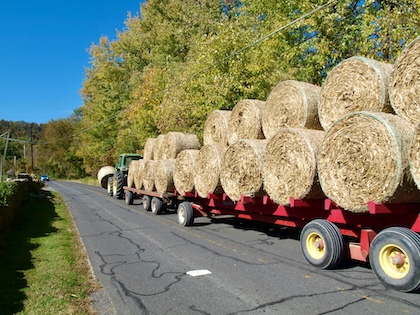
When wildfire tore through the Nebraska Sandhills in March, South Carolina farmers were among the thousands across the country who loaded up trailers and answered the call quietly, anonymously, and without being asked.
The Morrill Fire ignited on March 12 and within hours had consumed nearly 643,000 acres of ranchland in western Nebraska, making it the largest wildfire in state history. Three additional blazes followed in quick succession, and by the time the smoke cleared, more than 820,000 acres had burned across the state’s western and central regions. Grazing land for more than 35,000 cattle was gone. The fires arrived during calving season, when ranchers are most dependent on their pastures and most tethered to their land.
For Mike and Kayla Wintz, ranchers working a remote 11,000-acre leased spread deep in the Sandhills, the loss came in roughly two hours. With no grass left for their cattle to graze, and neighboring ranchers facing the same crisis, the couple had nowhere local to turn.
Then the phones started ringing.
Volunteer coordinator Sara Cover found herself fielding up to 200 calls a day from people across the country wanting to donate hay. Convoys of more than 20 trucks began rolling into the region loaded with bales, with schoolchildren cheering them on from the roadside. Farm shops and truck stops along the fire’s edge were converted into donation drop points stocked not just with hay, but with fencing supplies, barbed wire and livestock materials. Some donors called with a specific rancher in mind. Others told organizers to send it wherever the need was greatest.
Nobody asked for a receipt. Many didn’t leave a name.
Among those who made the journey were farmers from South Carolina, part of a nationwide, largely anonymous wave that CBS News correspondent Steve Hartman chronicled in a segment that aired this weekend on “CBS Sunday Morning.” The report brought the story to a national audience and put a face on what had, until then, been a quiet act of collective generosity playing out far from the spotlight.
By the time the segment aired, the Wintz family alone had received an estimated $80,000 worth of donated hay. Kayla Wintz said the donors wanted no recognition. They know they did it, she said, and that is enough for them.
That same instinct ran through the ranchers on the receiving end. Organizers reported that nearly every rancher called about an incoming hay delivery asked that it be redirected to a neighbor they believed was worse off.
A convoy of more than 22 trucks that departed from eastern Nebraska carried enough hay to feed nearly 1,500 cattle for a month, according to Farm Bureau estimates. U.S. Secretary of Agriculture Brooke Rollins visited the region and described how a single Facebook post had set that convoy in motion — semis rolling across the state toward families who had lost everything, with drivers donating their own time and fuel.
The Nebraska Cattlemen’s organization raised more than $1.3 million through its disaster relief fund to help ranchers replace forage, materials and equipment as the long road to recovery continues. Leadership acknowledged the money would not erase the damage, but described the effort as one of filling gaps and helping producers find their footing in what they called a new normal.
For the South Carolina farmers who made that drive, long, unannounced and unrecognized — it was simply what you do when a fellow farmer loses everything. No glory needed. Just hay, and the willingness to haul it.
Photo: Diane Helentjaris/Unsplash