State Environmental Officials Issue Harmful Algal Bloom Watch for Parts of Lake Hartwell
June 1, 2026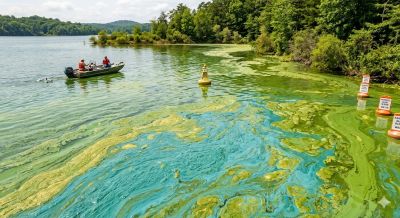
State health and environmental regulators are advising residents and visitors to exercise caution on the water after issuing a Harmful Algal Bloom (HAB) Recreational Watch for several areas of Lake Hartwell.The formal advisory, announced by the South Carolina Department of Environmental Services (SCDES), comes after aquatic science teams confirmed the seasonal return of a potentially toxic blue-green algae bloom.
the affected areas are being actively monitored to protect public health.
Affected Arms and Visual Indicators
Following a baseline survey conducted on May 27, field teams collected water samples that verified the presence of cyanobacteria. Investigators noted that the organism matches the exact species responsible for a similar large-scale bloom on Lake Hartwell last year.
According to the latest SCDES updates, reported sightings and active watch zones have expanded to include:
-
Coneross Creek lake arm
-
Eighteenmile Creek lake arm and its adjacent coves
-
Tugaloo River lake arm, specifically near Chickasaw Point
-
Anderson Cove, situated south of Providence Church Road
Officials state the active bloom can be easily identified by its distinct appearance, which frequently resembles bright blue-green spilled paint or thick, streaky yellow layers floating on the water’s surface.
Low Toxin Levels, But Caution Urged for Pets
State officials emphasized that while the presence of the cyanobacteria is confirmed, current cyanotoxin concentrations from the initial samples remain low and sit safely below South Carolina’s strict recreational safety criteria.
Despite the low toxicity readings, authorities are warning the public to avoid direct contact with any visible accumulation or discolored water. Exposure to cyanotoxins—via skin contact, accidental ingestion, or breathing in water spray—can cause acute symptoms in humans, including skin rashes, stomach pain, headaches, coughing, and watery eyes.
Furthermore, pet owners are being urged to keep dogs completely out of the water in affected areas. Because dogs are frequently attracted to the scent of algal mats and prone to licking their fur after swimming, they face a significantly higher risk of severe neurological or liver complications from algae exposure.
Continuous Public Monitoring
SCDES is working alongside the U.S. Army Corps of Engineers and local water utility providers to track the movement of the bloom, noting that atmospheric changes like rain, wind, or cooler temperatures typically cause the algae to break up and dissipate.
Upstate residents can track active advisory zones in real time by checking the digital Algal Bloom Monitoring Map at des.sc.gov. Possible algae sightings can be reported directly to the Bureau of Water HAB line at (803) 898-8374.
For further visual context on how these seasonal environmental conditions are currently impacting the region, you can watch this Lake Hartwell Algal Bloom News Report. This broadcast covers the expansion of the advisory following the latest citizen reports.