








A Promise Unfulfilled: Remembering a Korean War Soldier Still Missing
May 18, 2026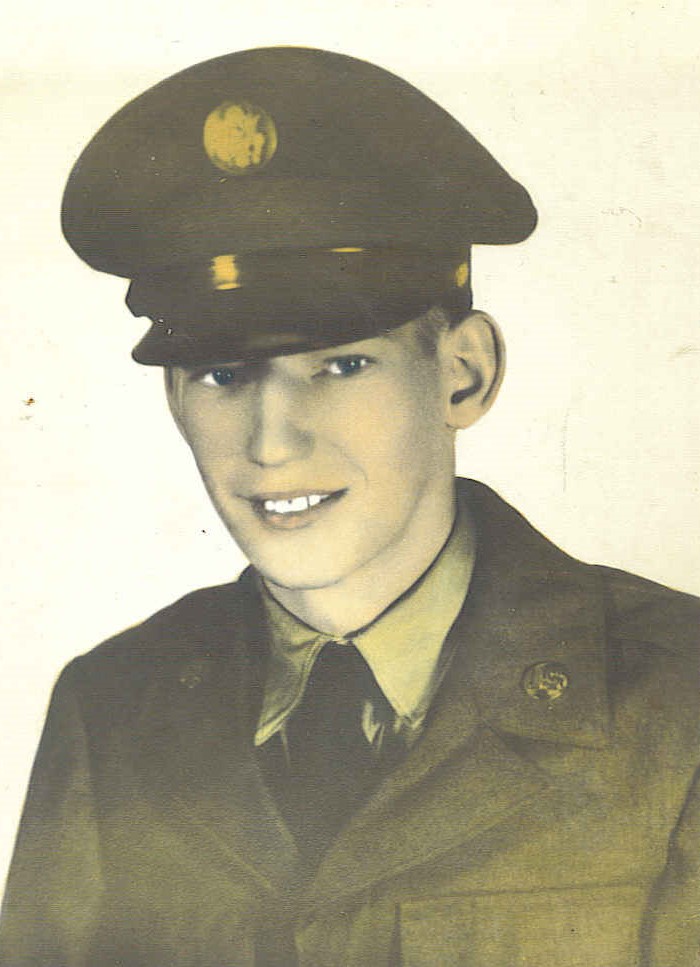
The Korean War, fought on the Korean Peninsula from 1950 to 1953 is often described as the first major battle of the Cold War.
After World War II, Korea, which was once occupied by Japan, was separated into governments. Divided along the 38th parallel, a communist regime supported by the Soviet Union took power in the north, and a non-communist government backed by the United States was established in the south. Friction between the two sides increased quickly.
On June 25, 1950, North Korean forces invaded South Korea in an effort to unite the peninsula under communist power. This triggered a swift international response. The United Nations, led mostly by U.S. forces, came to South Korea’s defense. Later, Chinese forces entered the war in support of North Korea, turning the battle into a larger proxy war between world powers.
The fighting was powerful and at times, brutal. Battles were fought across rice paddies, rugged mountains, and freezing terrain. Conditions were severe, especially during winters, where temperatures dropped well below zero. The front lines shifted dramatically in the early years, with both sides gaining and losing ground before the war settled into an impasse near the original dividing line.
One of the meaningful characteristics of the Korean War was its lack of a well-defined resolution. In 1953, an armistice agreement was signed, ending active combat but not officially ending the war. To this day, North and South Korea remain technically at war, separated by the heavily fortified Demilitarized Zone (DMZ).
The results of the war ended in millions of casualties, both military and civilian, and left lasting political and social impacts on the region. For the United States and other nations involved, it was a costly conflict that is sometimes called “The Forgotten War,” even though its after-effects are still felt today.
Possibly of most significance, thousands of service members were listed as missing in action, and many have yet to be recovered. Their stories, like that of Cpl. Charles McPherson, continue to remind us of the human cost of war and the significance of remembrance.
A Promise Unfulfilled: Remembering a Korean War Soldier Still Missing
More than seventy years after the guns went silent in the Korean War, thousands of American service members remain missing and unaccounted for with only their names etched in memory. Their final resting places are still unknown. Among them is one soldier whose story reflects both the sacrifice and the lasting commitment to never leave a warrior behind.
He was young, like so many others who answered the call in 1950, leaving behind family and friends. He served with courage in a war defined by harsh terrain, brutal winters, and an unwavering enemy. Whether fighting near the Chosin Reservoir, along the 38th parallel, or in one of the many lesser-known conflicts, his duty and responsibilities were clear: defend freedom alongside his fellow soldiers.
During the confusion of battle, he was reported missing in action. In those moments, uncertainty replaced certainty, his unit moved forward, but his destiny remained unclear. Letters were sent home, not with answers, but with questions. His family waited, hoping for good news, holding on to the possibility that he might still return.
But for many Korean War families and friends, closure never came.
Unlike later conflicts, the Korean War resulted in an armistice, not a formal peace treaty. The recovery and identification of remains were convoluted by the division of the Korean Peninsula, shifting front lines, and inadequate record-keeping during dangerous combat operations. While efforts over the years, through joint recovery missions and advancements in forensic science, have brought many heroes home, others remain lost to history, their stories preserved only through records, as minimal as they are, and remembrance.
Yet, he is not forgotten.
Veterans’ groups, many different organizations, and government agencies continue the mission of accounting for the missing. Through the efforts of agencies like the Defense POW/MIA Accounting Agency, there remains optimism that even after decades, remains of loved ones can be recovered, identified, and answers can still be found. Each identification is more than a scientific achievement, it is a promise kept.
For this serviceman, and thousands like him, remembrance is a form of honor. His sacrifice stands alongside those who returned, a tribute to duty, courage, and selfless service. His name may not be tied to a known location or grave, but it lives on in the hearts of those who refuse to let his story diminish.
As we reflect on his service and sacrifice, we are reminded that the cost of freedom is not only determined by battles won, but in lives that have been forever changed, and in some cases, never fully accounted for.
Until he is brought home, or his story fully told, we remember him not as lost, but as one of America’s enduring heroes.
Remembering Cpl. Charles McPherson: A Korean War Hero Still Missing
More than seventy years after the end of the Korean War, the story of Cpl. Charles McPherson stands as a solemn reminder of the sacrifices made and the promises still unfulfilled.
Corporal Charles McPherson answered his nation’s call during a time of international uncertainty, joining thousands of young Americans sent to the Korean Peninsula to defend freedom and liberty. Like many of his fellow Marines and soldiers, he was challenged by and faced extreme conditions; bitter cold, rugged terrain, and a determined enemy. These were the realities of a war often overshadowed in history, yet delineated by amazing courage and strength.
During combat operations, Cpl. McPherson was reported missing in action. In the confusion and fog of war, contact was lost, and despite efforts to locate and recover him, his remains were never returned home. For his family, this meant a lifetime of unanswered questions, no final goodbye, no gravesite to visit, only the enduring hope that one day his remains might be located, identified, and returned home to his loved ones.
His is not a unique story, yet it is extremely personal. Thousands of service members from the Korean War remain unaccounted for, their fate is unknown due to the challenges of the conflict, limited battlefield recovery capabilities, and the long-standing division of the Korean Peninsula that still remains today.
Notwithstanding the passage of time, the mission to bring these heroes home remains. Through the unceasing and ongoing efforts of the Defense POW/MIA Accounting Agency, recovery teams conduct investigations, excavations, and identifications using advanced forensic science and historical research. Each successful identification brings long-anticipated closure to families and honors the nation’s commitment to those who have yet to be returned.
Cpl. Charles McPherson’s legacy lives on through a story of remembrance. He represents a generation that stepped forward and volunteered without hesitation, serving with honor in one of America’s most challenging conflicts. Though his final resting place remains unknown, his sacrifice is not forgotten.
As we remember Cpl. McPherson, we reaffirm a simple but powerful promise: that no service member will ever be forgotten, and that the search for answers will continue, no matter how many years have passed.
His name lives on. His service is honored. And his story remains an important part of our nation’s history and his family’s history.
Keeping the Light On: The Legacy of Cpl. Charles McPherson Through His Family
The story of Cpl. Charles McPherson, who was declared missing in action during the Korean War and never had his remains returned home, is not only one of military sacrifice, but it is also a story of enduring family remembrance.
Though decades have passed, his legacy continues through family members who never had the opportunity to know him personally. One of those family members is his niece, Brenda VanderKooi. Born after his disappearance, she never met her uncle, never heard his voice, and never shared in the moments of his life before war changed everything. Yet his story has remained a lasting presence in her life.
For Brenda, Charles McPherson is not just a name on a roster or a line in a history book. He is family. A young man who once had a future, dreams, and people who loved him deeply, people who never stopped waiting for answers. Growing up with his story meant understanding both the honor of his service and the sacrifice he and so many others have made.
His mother’s act of leaving the light on for him became part of the family memory, a symbol of hope that never dimmed, even as years turned into decades. That light represents more than a search for return; it represents love that refused to end with doubt.
Today, Brenda VanderKooi carries that legacy forward. By speaking his name, sharing his story, and ensuring he is remembered, she helps preserve the humanity and compassion behind the history. In doing so, she honors not only her uncle’s service, but also the family that has carried his memory across generations.
Efforts continue to account for service members still missing from the Korean War. Each case represents a family like hers, families who have lived with unanswered questions but never stopped remembering.
Cpl. Charles McPherson’s story lives on not only because of how he served, but because of how he is still loved. Through his niece, his mother’s light continues to shine, bridging the past and present, ensuring that he is never forgotten.
Remembering Cpl. Charles McPherson: A Light That Never Went Out
More than seventy years after the end of the Korean War, the story of Cpl. Charles McPherson continues, not only as a testament to service and sacrifice, but as a symbol of a family’s unwavering hope for closure.
Corporal Charles McPherson answered his nation’s call during a time of great uncertainty, joining thousands of young Americans sent to the Korean Peninsula. He served with courage under some of the harshest conditions imaginable, freezing winters, mountainous terrain, and the constant danger of combat. Like so many of his fellow service members, he carried out his duty with honor.
Then, in the chaos and devastation of the war, he was reported missing in action.
For his family, especially his mother, time seemed to stand still. Without answers and without closure, hope became both a comfort and a burden. Each day brought the possibility, however small, that he might still return home.
And so, she left the light on.
Leaving the light on was a simple act, but one filled with profound meaning. The porch light became a beacon; of love, of faith, and of a mother’s refusal to give up on her son. Night after night, that light burned, symbolizing the belief that one day, her son, Cpl. McPherson would walk back through the door.
Though decades have passed and his remains have not yet been recovered, that light represents something greater than loss, it represents enduring commitment. It is a reminder that behind every missing service member is a family that never stopped hoping, never stopped waiting.
Cpl. Charles McPherson’s story is one of courage on the battlefield, but also of love at home. His mother’s light stands as a powerful symbol of remembrance, ensuring that his name, his service, and his sacrifice will never fade.
Until the day he is brought home, that light, whether literal or remembered, still shines.
Conclusion
The Korean War was more than a dispute over territory or beliefs, it was a conflict marked by sacrifice, loss, and enduring costs. While the armistice silenced the guns, it did not bring real closure for many families whose loved ones have yet to return.
Stories such as that of Cpl. Charles McPherson remind us that the war’s legacy is not restricted to history books. It continues to live on in the hearts and memories of families who have waited, anticipated, and in some cases, are still searching for resolutions. From a mother who left the light on, to a niece who carries forward his memory, these acts of remembrance ensure that those who served are never forgotten.
The Korean War may be referred to as the “Forgotten War,” but for those who remember, it is anything but forgotten. Its legacy endures in sacrifice, in service, and in the quiet, unwavering commitment to never leave anyone behind.