Constitutional clash: federal lawsuit challenges South Carolina’s strict tattoo Regulations
August 3, 2026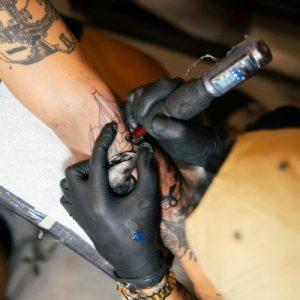
More than two decades after South Carolina legalized body art, a new federal lawsuit is challenging long-standing state restrictions on tattoo businesses, arguing that the regulations violate First Amendment protections for artistic self-expression.
The lawsuit, filed in federal court against South Carolina Department of Public Health Director Dr. Brannon Traxler and Attorney General Alan Wilson, targets two specific provisions of the state’s 2004 body art statute:
-
The 1,000-Foot Buffer Rule: A state prohibition preventing tattoo facilities from operating within 1,000 feet of any church, school, or playground.
-
Above-the-Shoulder Ban: A criminal ban making it a misdemeanor to apply a tattoo to a consenting adult’s head, face, or neck.
The legal challenge was mounted by Tiny Zaps Co., a boutique tattoo enterprise offering small, artist-designed body art, along with Upstate residents Joshua and Stephanie McDonald of Fountain Inn. The plaintiffs are represented by the non-profit public interest firm Pacific Legal Foundation.
“Holy City” Location Restrictions Spark Conflict
The dispute gained momentum when New York-based Tiny Zaps attempted to expand into South Carolina by partnering with a boutique hotel in historic downtown Charleston for an on-site pop-up studio.
Despite negotiating terms with the hotel and agreeing to abide by all state health, sanitation, and sterilization regulations, the enterprise hit a legal dead end. Charleston—long dubbed the “Holy City” for its high concentration of historic houses of worship—contains virtually no commercial real estate outside the mandatory 1,000-foot buffer from a church, school, or playground.
“Whether artwork appears on canvas, paper, or skin, the Constitution protects both the artist’s right to create it and the customer’s right to receive it,” attorneys argue in the complaint, contending that the state cannot single out skin art for restrictive barriers not imposed on other commercial businesses.
The suit highlights that body-piercing studios operate under significantly more flexible location rules despite adhering to similar sanitation standards. Additionally, state law allows liquor stores inside municipal limits to operate within 300 feet of a church or school—less than a third of the distance required for a licensed tattoo studio.
Upstate Couple Joins Constitutional Push
For Fountain Inn residents Joshua and Stephanie McDonald, who joined the suit as co-plaintiffs, the lawsuit touches on individual liberty and artistic choice. The couple, who already have body art, state they wish to receive additional designs above their shoulders. Under current South Carolina code, an artist performing a head, face, or neck tattoo faces potential fines or up to a year in prison.
“Where someone gets a tattoo should be a decision between them and their artist,” the plaintiffs contend, arguing that above-the-shoulder bans stem from outdated social stigma rather than legitimate public safety concerns.
A Shifting Legal Landscape
South Carolina was among the last states in the nation to legalize tattooing, doing so in 2004 under strict regulatory oversight. A 2002 South Carolina Supreme Court ruling previously held that tattooing was not a protected form of speech under the state constitution.
However, recent federal precedent—including a landmark decision by the 9th U.S. Circuit Court of Appeals—has increasingly recognized tattooing as expressive art protected under the First Amendment.
State lawmakers, including Rep. Brandon Guffey (R-Rock Hill), have previously introduced legislation to ease distance requirements and lift restrictions on neck and head tattoos, citing government overreach and economic limitations on local small businesses.
Representatives for both the Department of Public Health and the South Carolina Attorney General’s Office declined to comment on the active lawsuit, citing standing policies regarding ongoing litigation.