Georgetown’s lost Spanish colony could have rewritten American history
June 23, 2026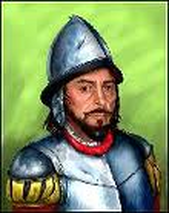
By Mary Boyd
In the history of Georgetown County, a story emerges that could have changed American history and changed the British dominance in the colonies and world affairs. In 1526, an attempt to colonize the east coast of America was made by the Spanish. A fleet of six ships led by Lucas Vasquez de Allyon arrived somewhere on the coastline near Georgetown. Some say it was at Cape Fear River, some say Winyah Bay, maybe even Sapelo Island, Georgia. The description of the area found in Spanish records fits all three. Some research puts the expedition in Winyah Bay up as far as the Pee Dee River. Others claim the settlement was upon the shore of present day Hobcaw Barony.
One of the major factors in the story is that one of the most important vessels in Ayllon’s fleet went down off Georgetown. The “Capitana” was the supply ship for the 500 to 600 passengers and crew, and the loss may have been the crucial element in the failure of these colonizers to sustain a settlement. Had the colony been successful, Georgetown would have been the earliest settlement in the entire United States, before St. Augustine, Florida in 1565 by Ponce de Leon and before Jamestown, Virginia in 1607. Searches have been made for the Capitana off the shores of Georgetown. If found, it will definitely pinpoint the site of the Spanish settlement here and rewrite history. It may be located offshore, or under what is now South Island. This area didn’t exist 500 years ago, and North Island would been vastly different.
Before the fateful voyage, Ayllon, born in Toledo, Spain, was living in Santo Domingo on the island of Hispanola. There he met a Native American captured in a previous Spanish slaving expedition in 1521 along the South Carolina coast. He was named Francisco Chicora, and he told some fantastical tales about his homeland, a land called Chicora along the coast of South Carolina. It is thought that his stories were meant to lure Ayllon to explore there so Chicora could escape and return to his homeland. That is exactly what happened. When the expedition arrived in 1526, Chicora deserted with several other captives, never to be seen again. Of course, the tales of fabulous wealth were untrue.
Ayllon used African slave labor for perhaps the first time within the present United States, to build the colony named San Miguel de Gualdape. African slaves had long been imported into the Caribbean before the first ones came to American shores. Within a few months, hardships, the lack of supplies and fever took its toll. Most of the colonizers died, including Ayllon himself by November of 1526. The approximately 150 survivors built a simple, open vessel and returned to Santo Domingo, never to return to the area. This is the first recorded instance of shipbuilding on the coast of what is now the United States.
Besides the 500 to 600 passengers, Ayllon brought 83 horses. This is the first introduction of a special breed of Spanish horses that escaped captivity and wandered off. These were the progenitors of the Marsh Tacky horses unique to South Carolina. It is a small horse, well adapted for use in the lowland swamps of South Carolina. The horses were used by the colonists during the American Revolution, and by South Carolinians for farm work, herding cattle and hunting. Francis Marion, South Carolina’s “Swamp Fox”, used Marsh Tackies in his ambush raids against the British. Marsh Tackies have the same ancestral bloodlines as Florida Cracker Horses and North Carolina Banker horses.
In 1540, Hernando de Soto led an expedition up the Santee River, deep into Indian territory. Although there is no firsthand account, they met Indians who showed them a burial spot where earlier explorers were laid. Some “trinkets” were found there which were typical of Spanish expeditions of the time. This supports the theory that here were the remains of Lucas Vasquez de Allyon and his group of colonizers.
If the colony of San Miguel de Gualdape had succeeded, Georgetown would have been a huge tourist mecca, as St. Augustine is today. A list of American firsts would have included the first permanent settlement in the entire United States, the introduction of African slaves, the introduction of Marsh Tacky horses and the first building of a ship in America. Even though the colony didn’t work out, Georgetown still has an incredible history. The Georgetown County Museum houses stories and artifacts, including six American “firsts.” Come by to find out what they are.
The Georgetown County Museum is located at 120 Broad Street, right around the corner from Front Street. Hours are Tuesday through Saturday from 11:00 am to 3:00 pm. Admission is FREE, and donations are gratefully accepted.
About the Author
Mary Boyd is a dedicated local historian with a deep passion for preserving and sharing the rich narrative of Georgetown County. Mary is closely associated with the Georgetown County Historical Society Museum. She is a frequent contributor to local historical research and warmly welcomes queries from the community regarding Georgetown’s unique history and cultural heritage.
Get in Touch: For questions or to learn more about the museum’s collections, you can reach Mary at: [email protected].