Georgetown’s waterfront redevelopment is stalled. The cost of inaction is growing.
September 28, 2026
The breakdown of a major brownfield redevelopment underscores what Georgetown stands to lose—and what public officials, property owners and developers must do to restore momentum.
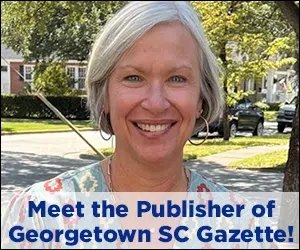
By Karen Owens
Publisher
Hundreds of Georgetown residents and business owners filled Winyah Auditorium last Thursday to hear why a major redevelopment opportunity has stalled. Warren Waters, a principal and founding member of River Development Equities, and members of his project team said the contract to purchase and redevelop the former Liberty Steel site ended because RDE lacked enough time to determine the full scope and cost of environmental remediation. Additional testing was needed, they said, but Liberty Steel would not extend the contract period.
The meeting left Georgetown with a clear choice: allow uncertainty, mistrust and procedural delays to define the future of these properties, or insist that the developers, property owners and public officials return to the table with the time, information and safeguards needed to pursue responsible redevelopment.
Waters expressed appreciation for the outpouring of support from the larger Georgetown community since their initial information session, which was held on June 11, to properly clean up this contaminated industrial site and provide a multi-use development with public spaces that would benefit everyone.
“Our goal has always been to clean up the site in a way that it would be safe for your children and grandchildren,” Waters said as he spoke the importance of this “once in a generation” redevelopment opportunity for the City of Georgetown.
Waters outlined plans to create jobs and businesses; improve public infrastructure, including flood prevention on Front Street, a new police substation and parking garages; add an amphitheater, walking paths and benches; include attainable housing; and open new views of the harbor and waterway from Fraser Street. Taken together, he argued, those elements would create a place Georgetown could be proud of.
Waters also addressed rumors about what the project might entail – telling the audience that RDE doesn’t build single family homes or tear up virgin forests for development. RDE specializes in cleaning up brownfield sites to revitalize contaminated properties for beneficial reuse that ultimately increase the local tax base, generate hundreds of jobs and create unique public spaces that citizens and visitors to the area can enjoy.
They continue to pursue redevelopment efforts for the International Paper plant property, which has different timeline and set of criteria that they continue to work through. While Waters holds out hope that Liberty Steel will come back to the negotiating table, he reinforced his interest and commitment to delivering a high-impact redevelopment for the benefit of Georgetown and the state of South Carolina.

In addition to Waters, members of his project team also made brief remarks related to their component of the massive project and fielded questions from the audience.
Bob MacPhee with GEL Engineering shared some of the findings from the baseline environmental assessments conducted. There was ground water contamination in three main areas, which included a chlorinated solvent plume, hydraulic fluid plume, and PFAS (more frequently known as forever chemicals). Additional screenings were needed to better assess the scope and cost of the contamination clean-up.
According to news reports, Liberty Steel was unwilling to provide RDE with more time for further assessments, unless RDE agreed to pay them $5 million for the contract extension.
Next, Nathan Schutte, a principal with McMillan Padzan Smith Architecture, described his firm’s efforts to work with city planning staff to create a symbiotic design plan for the inner harbor that would connect the county’s port property along with the former steel and paper plant properties. Ultimately the current zoning doesn’t allow for a redevelopment ordinance and efforts to codify a text amendment to the regulations were impacted by the city’s current zoning moratorium.
Long-time economic development professional Mark Farris lamented the contract breakdown with Liberty Steel, citing how the apparent public-private partnership that was forming around this Georgetown project could be a real gamechanger for the historic port city.
“Local economic development helps create stability and new infrastructure. It also improves property values and instills community pride,” Farris of Sustainable Consulting Solutions, LLC told the audience.
Markus Kastenholz, managing director of Land and Capital Markets for Colliers International, was the final speaker to address the audience, and his remarks on the zoning moratorium’s recent extension sent a chilling effect. “Capital goes where it is welcome,” he said, adding that interest by businesses and investors to locate in the redevelopment cooled once that action was taken by city council.
Georgetown Mayor Jay Doyle later rebuffed that remark in media interviews after the meeting.
Waters and his project team deserve credit for explaining their position publicly, but transparency from one side is not enough. Georgetown residents need clear information from Liberty Steel and city officials about the environmental risks, the contract dispute and the regulatory path forward. All parties should return to the negotiating table if they can do so without compromising public health, fiscal responsibility or the community’s long-term interests. Otherwise, Georgetown could be left for years with a partially demolished, contaminated eyesore where a transformative waterfront project might have stood.