









Protecting the view: 1,440 acres near McClellanville conserved for future generations
June 30, 2026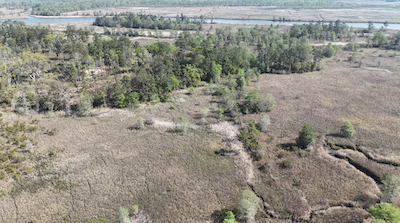
Lowcountry Land Trust, a nonprofit committed to protecting land and water forever and connecting the community to conservation, announced the permanent protection of 1,440 acres in northern Charleston County through new conservation easements on two parcels: the 1,129-acre AC II property and the 311-acre Montgomery Tract, in partnership with White Oak Forestry Corporation.
As growth continues throughout the Charleston region, Lowcountry Land Trust and White Oak Forestry’s collaboration helps ensure one of the area’s most iconic and sought-after landscapes remains free from subdivision and large-scale development. Surrounded by Francis Marion National Forest, Hampton Plantation State Historic Site, Cape Romain National Wildlife Refuge, and the Santee Coastal Reserve, the two properties further connect an expansive network of conserved land that supports the region’s natural beauty, wildlife habitat, and coastal resilience.
For many residents and visitors alike, the impact is visible from both the road and river, as the scenic vistas that have long distinguished northern Charleston County will remain largely unchanged for generations because of the work that people have dedicated to protecting it. Together, the two new conservation easement projects protect nearly two miles of public road viewsheds along North Highway 17 and nearly 4,000 feet of frontage along the South Santee River, while also conserving working forests, wetlands, and open space, and strengthening one of the largest remaining protected landscapes in coastal South Carolina.
“We are thrilled to have placed conservation easements on these two large properties,” said Hunter Allen, conservation project manager for Lowcountry Land Trust. “With the protection of AC II and the Montgomery Tract, a total of 1,440 acres in rural Charleston County will never see more than two homes built upon them. The views enjoyed by so many as they travel into Charleston, will continue to be forests, wetlands, wildlife habitat, and working lands rather than future subdivisions.”
AC II contains extensive managed longleaf pine forests, including areas that have been actively converted from loblolly pine to longleaf pine, helping restore a historic Lowcountry landscape that once dominated much of the Southeast. The Montgomery Tract includes significant herbaceous wetlands that help improve water quality, reduce erosion, and strengthen natural flood resilience. The two newly protected properties will continue supporting sustainable forestry and agricultural uses while remaining free from future subdivision and large-scale development.
“Tying together the protected landscape on the Santee in a public/private partnership is a hallmark of SC conservation,” commented Raleigh West, director, South Carolina Conservation Bank. “It is inspiring to see incredible landscapes come together for landscape-scale conservation.”
White Oak Forestry Corporation has a longstanding commitment to conservation and responsible forest management, partnering on conservation projects that have helped expand protected public lands through transfers to Francis Marion National Forest. Funding for both conservation easements was provided by the Charleston County Greenbelt Program and the South Carolina Conservation Bank. The existing and strengthened protected landscape reflects how partnerships between private landowners, conservation organizations, and public funding programs can preserve the places that make the Lowcountry unique and contribute to residents’ quality of life.
ABOUT LOWCOUNTRY LAND TRUST
Lowcountry Land Trust—a 501(c)(3) nonprofit organization—permanently protects land throughout coastal South Carolina that is foundational to the region’s overall resilience and residents’ quality of life. Having protected over 167,000 acres since 1986, Lowcountry Land Trust is one of the most impactful land trusts in the state and across the country. Its work includes the stewardship of privately owned land and iconic public places, such as the future Angel Oak Preserve—a 44-acre immersive park and living museum in partnership with the City of Charleston. More information about Lowcountry Land Trust is available at www.lowcountrylandtrust.org